
10 Free AI Video Generators Without Watermarks (My Hands-On Picks)
Looking to find a free AI video generator without no watermarks?
A clean export matters, but so does creating a video worth sharing. The right tool should help turn an idea, photo, or script into content that fits the project.
After tons of time of trial and error, I’ve narrowed it down to 10 AI video creators that meet my standards, and actually produce great results. Whether you’re a content creator, marketer, or just curious about AI, these picks won’t disappoint.
Pollo AI - Best Free AI Video Generator without Watermarks Overall
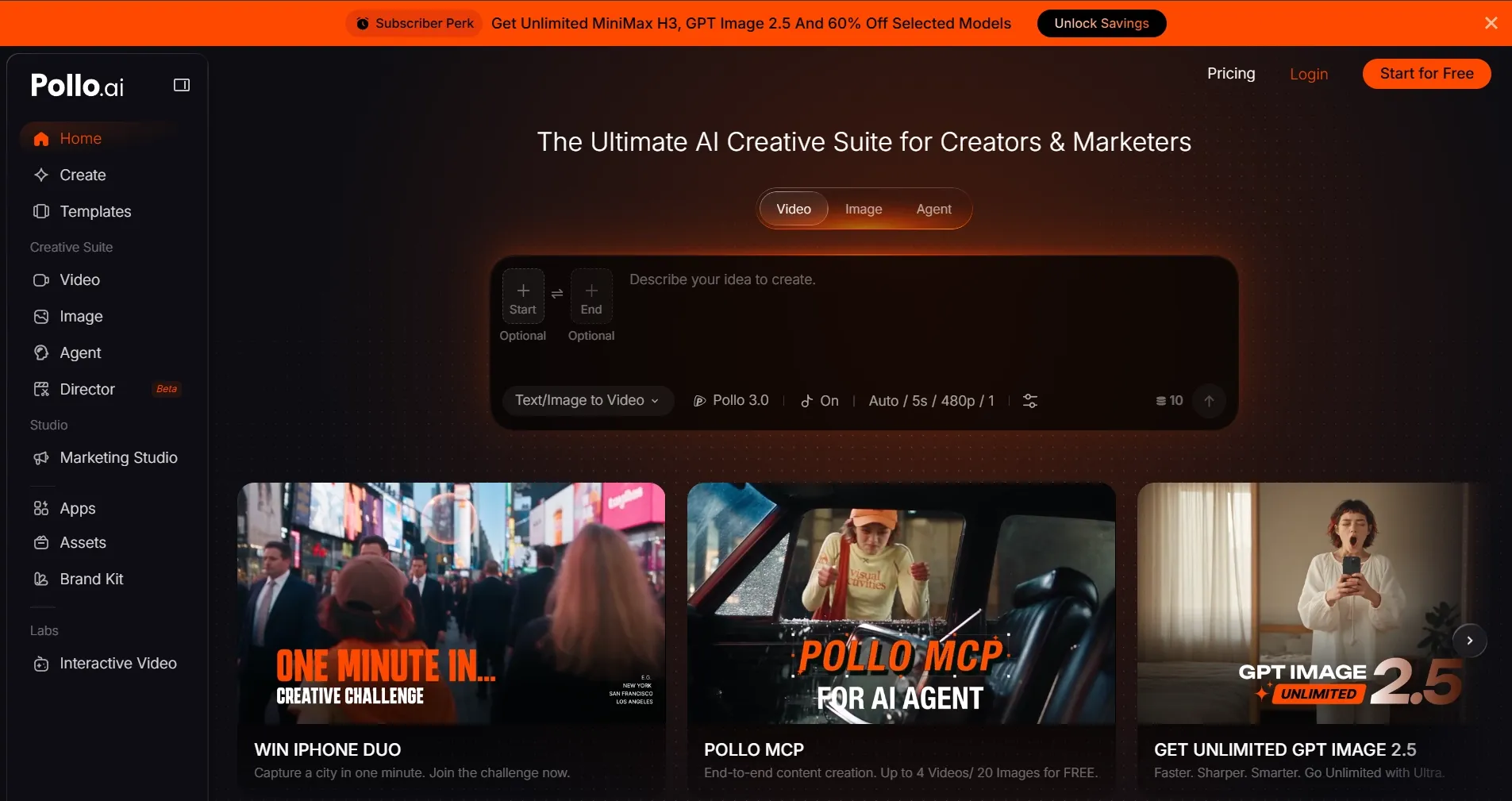
The watermark-free AI video generator topping my list is Pollo AI. It's free to try, and offers a download option for you to get video outputs with no watermarks.
Pollo AI is the ultimate AI creative suite for creators, marketers, and sellers. You can develop original scenes, animate existing visuals, and refine your clips in one workspace, whether you are making social content, product videos, or a short story.You can try the top video models like Seedance 2.5 and Minimax H3.
With Pollo AI, you can create videos from text and images. It lets you make all kinds of cool videos—like animated films, cinematic scenes, or even 3D adventures! Describe the action, setting, and camera movement to give your scene a clear direction.
Prefer to start with a brief? Pollo Agent helps plan the project, select workflows, and create the required assets. It gives you a guided route from an initial idea to a video you can review and refine.
Pros:
- Text, image, and reference inputs support different creative starting points.
- Multiple video models make it easier to explore alternative visual directions.
- Marketing workflows and Pollo Agent support projects beyond individual shots.
Cons:
- Model access, generation allowances, and export options depend on the plan.
- Complex scenes may need several attempts and additional refinement.
Stop Switching Tools. Start Creating.
Using Pollo AI to generate publish-ready videos without watermarks — ready in seconds with every top model.
Start Creating Free
Synthesia - Best for Training and Business Presentations

Synthesia is a strong fit for teams producing training, onboarding, and internal communication videos. Its avatar-led approach makes structured explanations easier to develop when the main goal is communicating information clearly and consistently.
The platform combines AI presenters, voiceovers, presentation workflows, and translation tools. Existing documents or slides can provide a starting point, helping teams adapt written material into narrated videos instead of building every scene from scratch.
What I found also helpful are the customization options. You can tweak colors, fonts, and even get your team involved in making videos together. There are also lots of ready-made templates for different purposes like school projects, training, or even marketing, which made it easier for me to get started.
You can also read this Synthesia AI review for more information.
Pros:
- Well suited to narrated training and onboarding content.
- Supports presentation-based video creation and localization.
- Offers business-focused avatar and branding workflows.
Cons:
- Free access does not include every publishing feature.
- Plan selection matters for team workflows and exports.
Pictory - Best for Natural-Sounding Voiceovers

Pictory is another AI tool I often played around with. It helps you make high-definition videos without any watermarks, and the voiceovers sound really natural!
One of its neat features is that you can edit your scripts right on the platform, which means you can make sure your video has the best message. I was impressed by the large library of AI videos available, which really helped me level up my projects.
You can also add your own branding, like colors and logos, to make your videos feel personal. Plus, Pictory allows you to collaborate with others in real-time and gives you different options for exporting your videos, so they fit perfectly on sites like YouTube or TikTok.
See the Pictory review for a closer look at the workflow.
Pros:
- Gives articles and scripts a route into video.
- Combines narration, captions, and visual assets.
- Supports consistent branding across recurring content.
Cons:
- Trial downloads carry Pictory branding.
- Specific scenes may need uploaded or separately created assets.
HeyGen - Best for Personalized Presenter Videos

HeyGen is worth considering for recurring presenter videos and localized messages. Stock and custom avatars give creators and teams ways to deliver scripts without recording every new version in front of a camera.
I found the voice cloning feature pretty cool too, as it supports over 40 languages and even lip-syncing. Its avatar, voice, and translation features are useful when one message needs several versions. A product introduction, for example, can keep a recognizable presenter while the script or language changes for a different audience.
Plus, it has a script generator, which helped me come up with high-quality scripts for my videos. The interface is user-friendly, making it perfect for anyone trying AI for the first time.
Read this HeyGen AI review for more information.
Pros:
- Supports stock and custom presenters.
- Offers voice and localization workflows.
- Useful for repeatable spokesperson content.
Cons:
- Free generation has duration and usage limits.
- Repeated testing can become slower or more credit-sensitive than lightweight social video tools.
InVideo AI - Best for AI-Assisted Video Assembly

InVideo combines AI-assisted creation with an editing environment for developing complete videos. It is relevant to projects that need narration, visual assets, and deliberate scene arrangement, rather than only a single generated shot.
I enjoyed how easy it was to customize these templates for different online platforms. You can even generate videos just by typing what you want, and it helps with writing scripts, adding subtitles, and creating voiceovers.
One thing that really stood out to me was the ability to export videos in 4K resolution. The tools for trimming and resizing videos are super handy, and the interface is sleek and easy to navigate. Plus, you can collaborate with friends or classmates on your projects, which makes video-making a lot more fun.
Read this InVideo review for additional product context.
Pros:
- Combines AI creation with timeline editing.
- Supports multiple models and visual sources.
- Offers collaborative editing on supported plans.
Cons:
- Generation allowances and model access vary by plan.
- Projects still need editorial review for pacing and visual fit.
AKOOL - Best for Video Localization and Interactive Avatars
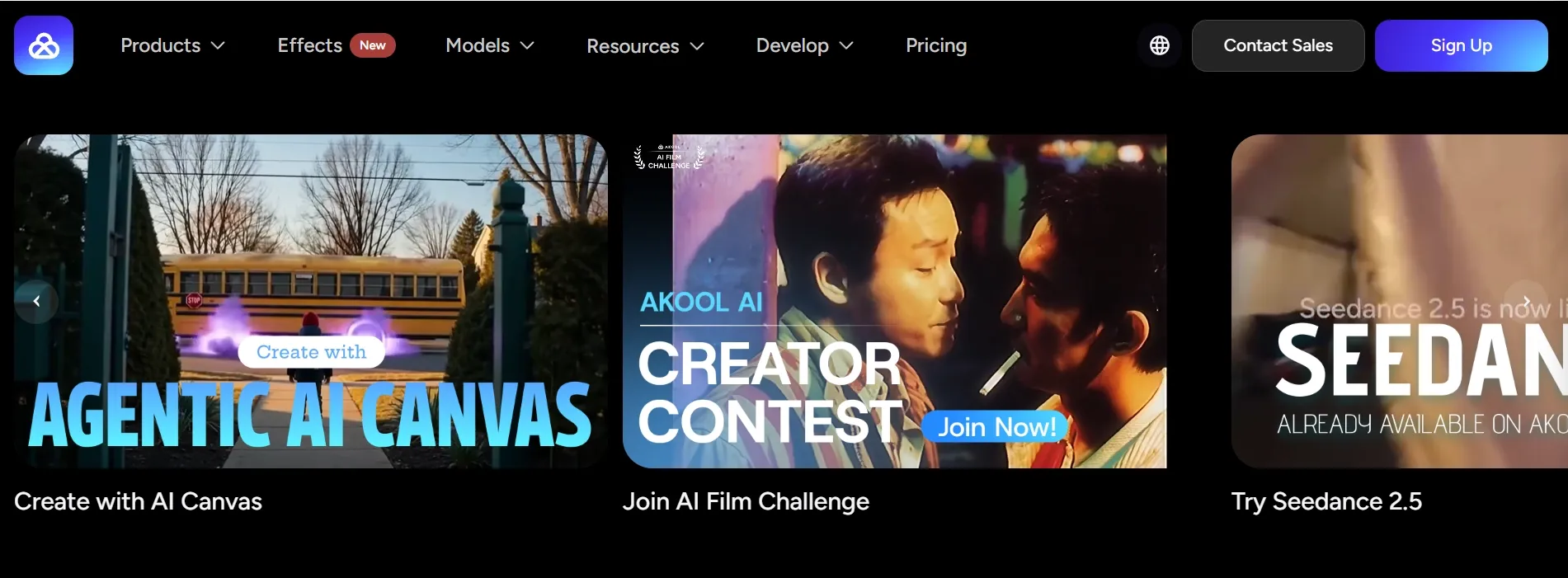
AKOOL suits teams exploring translated videos, digital presenters, and interactive avatar experiences. Its range is especially relevant when a project needs to adapt a speaker's message for different audiences or delivery formats.
The platform includes video translation, lip-sync tools, avatar creation, and streaming avatars. These are distinct workflows: translating an existing presentation serves a different purpose from building an avatar that responds during a live interaction.
One of my favorite features is the real-time AI studio with live camera, which helps you modify your face and persona in real-time during virtual meetings or live broadcasts. Plus, if you're working on a project with friends or classmates, this feature provides a professional and private virtual identity.
Pros:
- Combines translation with avatar workflows.
- Includes streaming avatars for interactive use cases.
- Offers lip-sync and voice-related tools.
Cons:
- Free outputs include a watermark.
- Business licensing and advanced features require careful plan selection.
GoEnhance - Best for AI Video Restyling
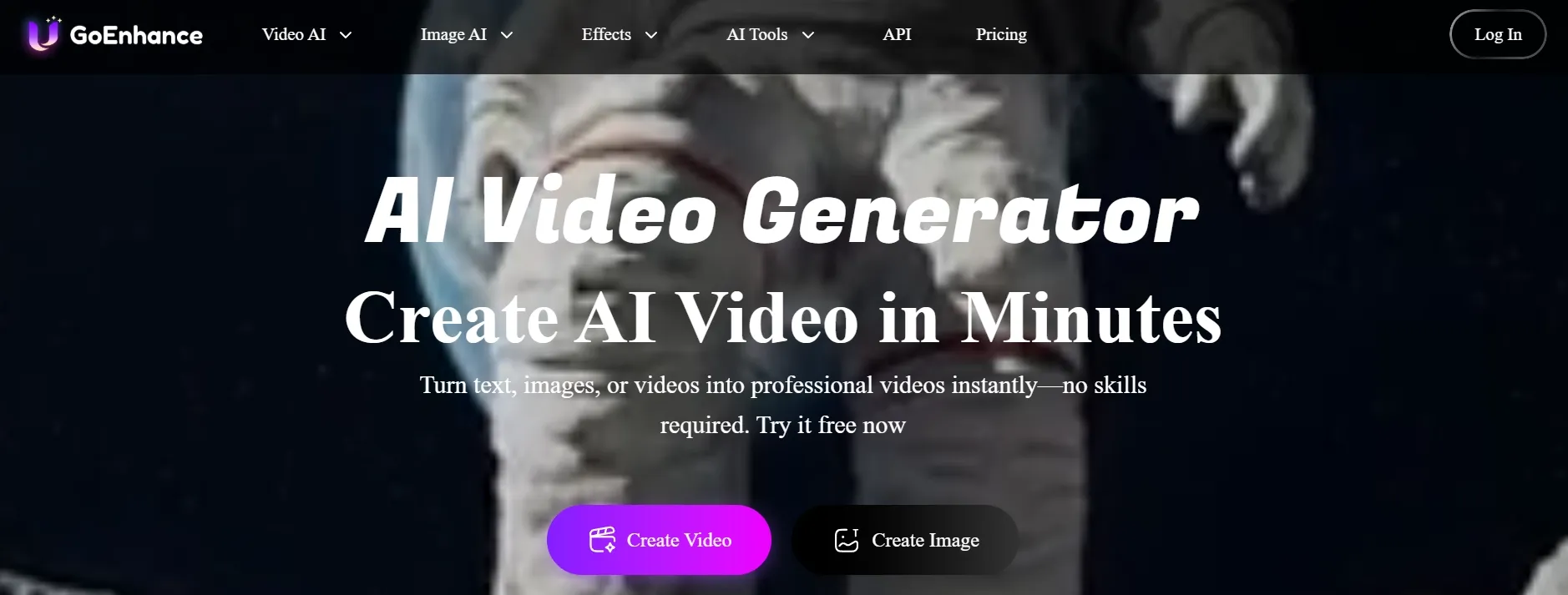
GoEnhance AI is a useful option for creators who want to transform existing footage into a different visual style. Its video to video tools make it especially relevant to animation-inspired edits and stylized social clips.
Alongside restyling, the platform offers text and image generation workflows, character animation, and lip-sync tools. This gives creators several ways to build around source footage instead of treating every project as a blank-page generation task.
What impressed me about GoEnhance is it can create character animation in just a few minutes. You can also make basic changes, like adding text, to customize your videos. Plus, it has affordable pricing, so it works well for individuals.
Read this GoEnhance review for more information.
Pros:
- Supports video to video transformation.
- Includes character animation and lip-sync tools.
- Offers several starting points for stylized content.
Cons:
- Free usage is limited by tokens.
- Commercial use is restricted to eligible subscription tiers.
OiiOii - Best for Agent-Guided Animation Projects
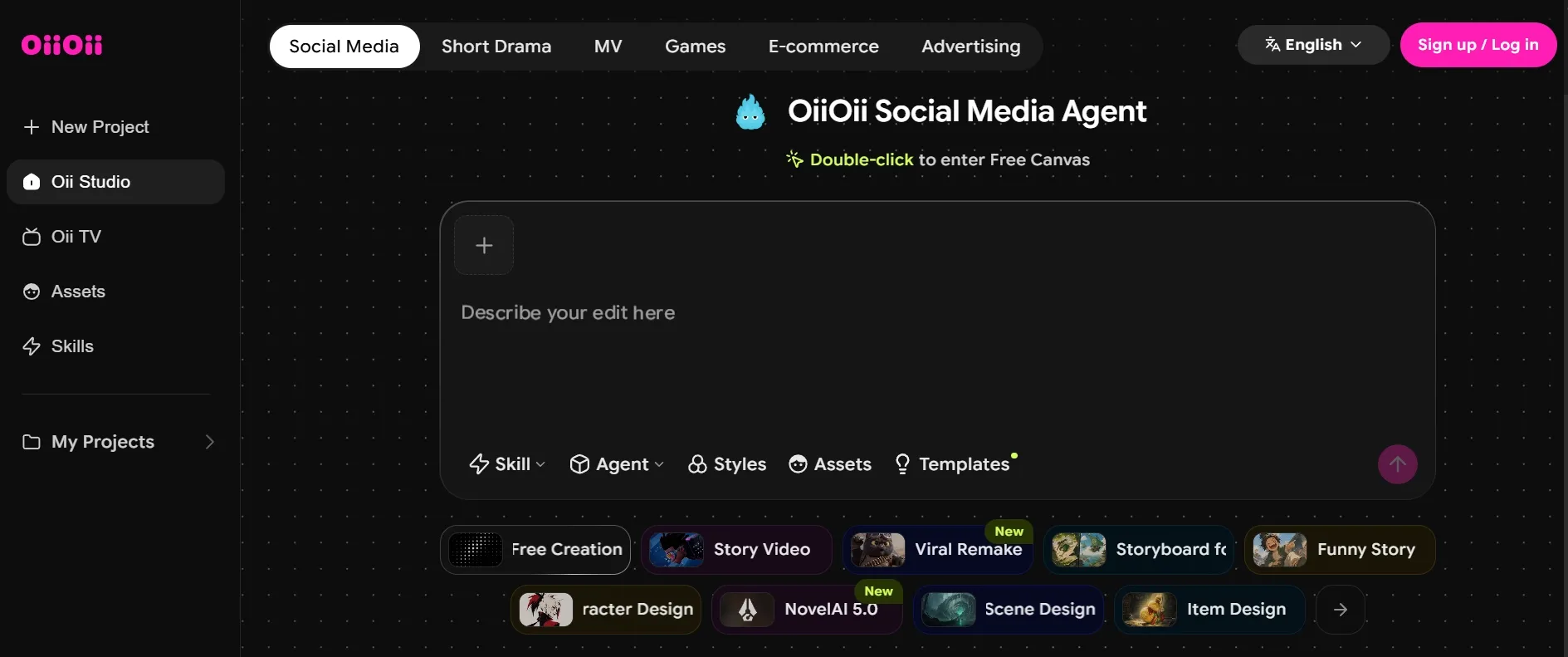
OiiOii focuses on agent-guided creative projects, with animation and story development central to its presentation. It is worth exploring for short narratives that need characters, scenes, and a visual direction developed together.
Its current interface includes story video, storyboard, character design, and scene design workflows. These entry points can help break a broad animation idea into more concrete creative decisions before developing the final sequence.
Besides, OiiOii can take long videos and turn them into short, snappy clips perfect for platforms like TikTok or Instagram. This is useful for sharing highlights or key points from a longer project.
Read this OiiOii review to get more informaition.
Pros:
- Provides story and storyboard workflows.
- Includes character and scene design entry points.
- Suits animation-led creative exploration.
Cons:
- Free usage is limited by tokens.
- Story coherence still requires creative review.
Renderforest - Best for Branded Templates and Explainers

Renderforest combines ready-made video formats with AI creation tools. It is a useful choice for businesses that need recognizable structures for explainers, promotional videos, logo animations, and other recurring branded content.
Its template library provides a starting point for layout and visual pacing, while its newer AI video tools broaden the available creative options. The platform should no longer be described as primarily an animation-only product.
Plus, I liked that it offers affordable pricing options, including discounts for yearly plans, making it accessible for anyone on a budget.
Pros:
- Offers templates for explainers, promotions, and logo animations.
- Combines established formats with AI generation tools.
- Useful for recurring branded content.
Cons:
- Template structure can limit highly specific creative directions.
- Export conditions depend on the selected plan.
Funny AI - Best for Casual Video Effects
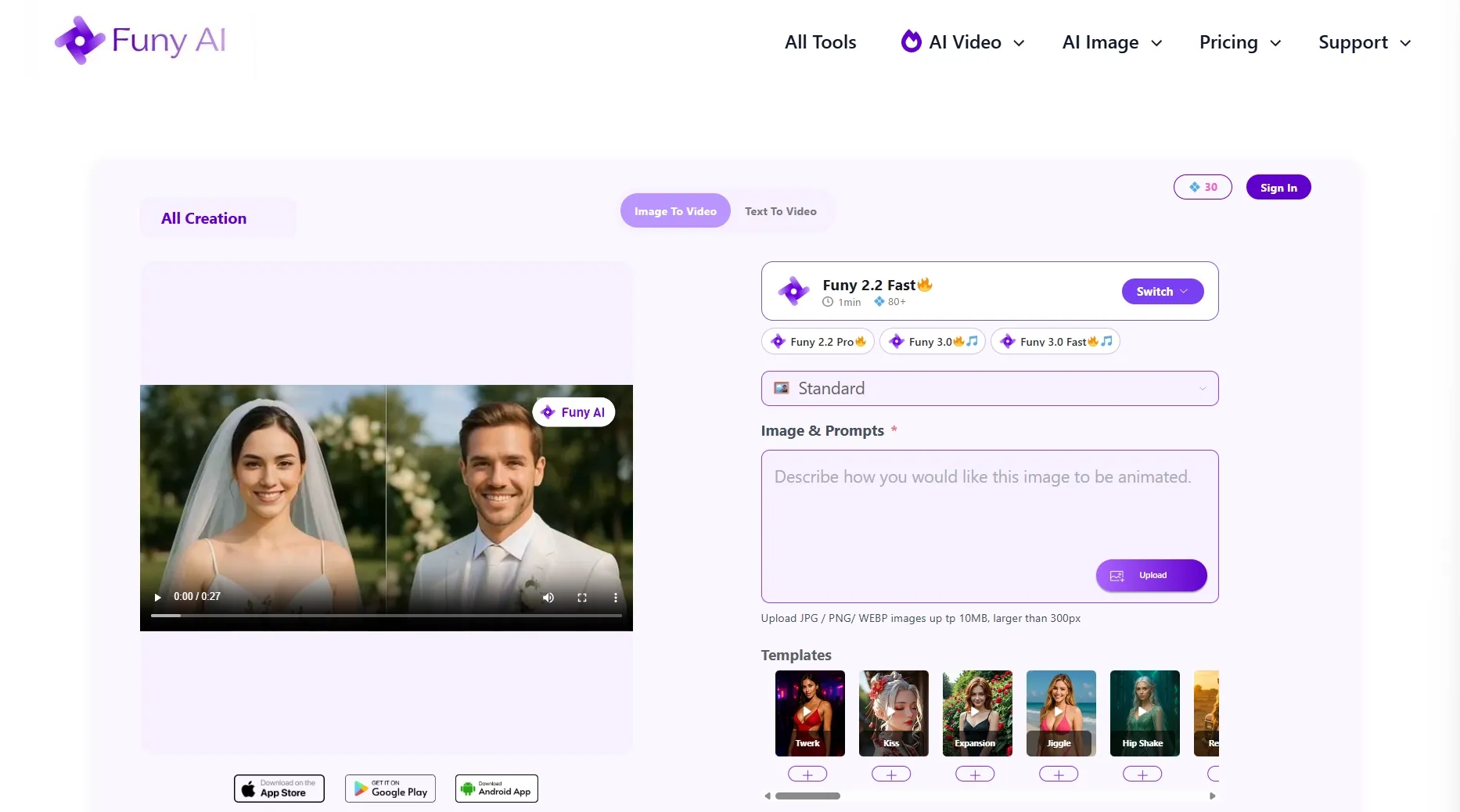
Funy AI offers text and image to video tools alongside themed visual effects. It is a straightforward option for casual experiments, animated photos, and playful clips where the goal is exploring an idea quickly.
Its effect-based entry points reduce the need to invent a detailed prompt from scratch. A creator can start with a familiar format, supply an image, and see how the visual treatment fits a personal or social project.
It is also optimized for social media engagement. The platform’s proprietary models ensure smooth frame transitions and vibrant colors.
Pros:
- Provides text and image to video options.
- Offers themed effects for quick creative experiments.
- Advertises free credits for initial use.
Cons:
- Works better for users who already understand references, shot planning, and continuity.
- Individual tools may have different generation and export conditions.
Conclusion
The right AI video tool depends on the content being made. Avatar platforms suit presenter-led messages, while animation and template tools serve more specific formats. Free access can help assess the workflow before committing to larger projects.
For a flexible starting point, choose Pollo AI. You can create original footage, animate your images, and refine the result, with models, editing tools, and guided workflows available as your project develops.
Have an idea ready? Start with the AI video generator, or give Pollo Agent a brief to develop. Turn the concept you have been saving into a first video you can build on.