

Shibuya Cowboy Rampage Video Breakdown (Prompts Included)
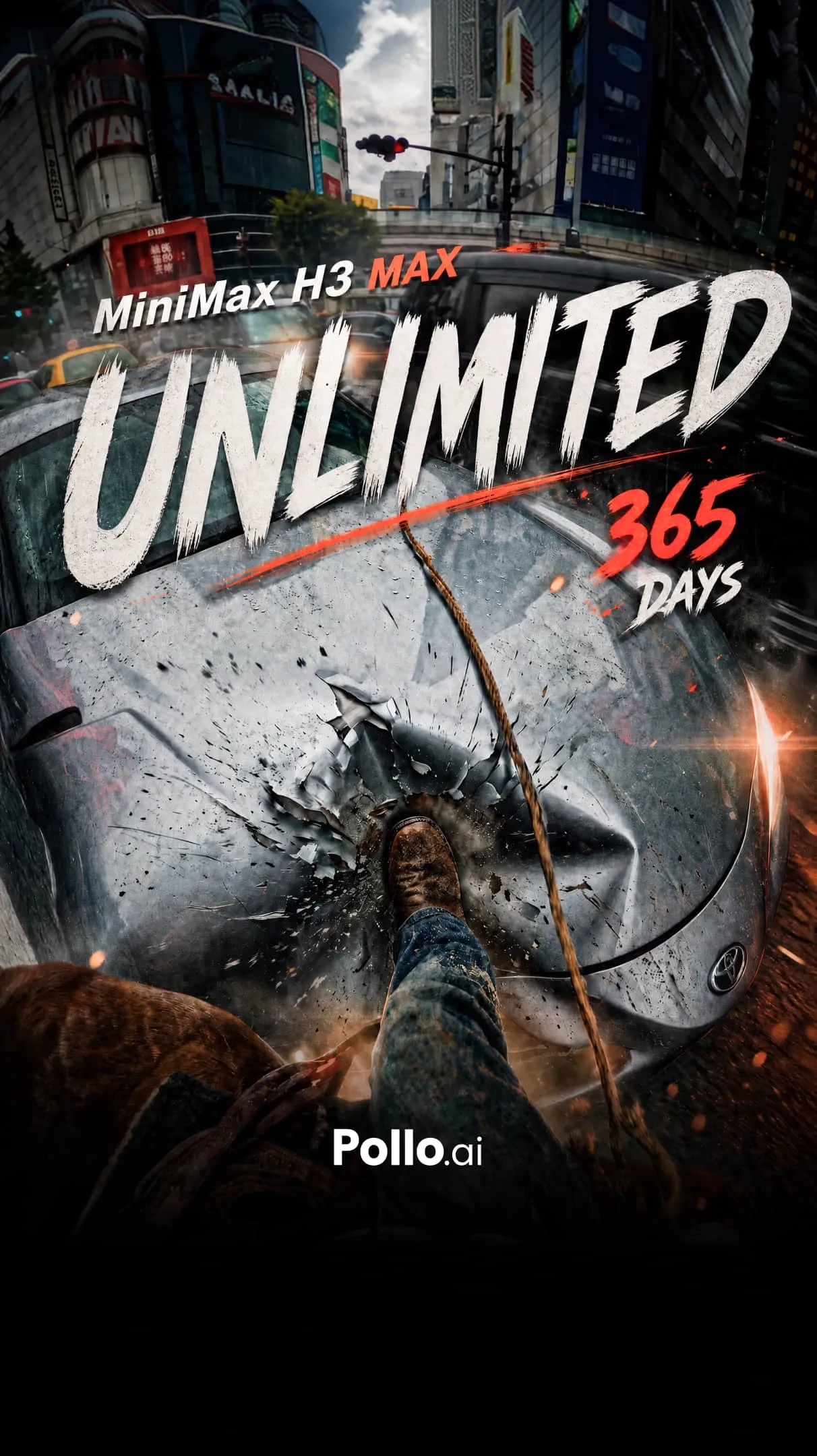
This 15-second concept drops a calm Western rider into gridlocked Shibuya traffic and shoots the action from a raw chest-mounted FPV camera. The workflow starts with separate turnaround sheets for the horse and cowboy, then combines those references in a tightly timed image-to-video prompt.
Step 1: Create the Horse and Cowboy
Reference Images
Generate the horse and cowboy as separate three-view turnaround sheets. Matching front, exact side, and back views gives the video model clear information about anatomy, clothing, tack, materials, and signature details before either subject begins moving.
Example Prompt Horse Reference
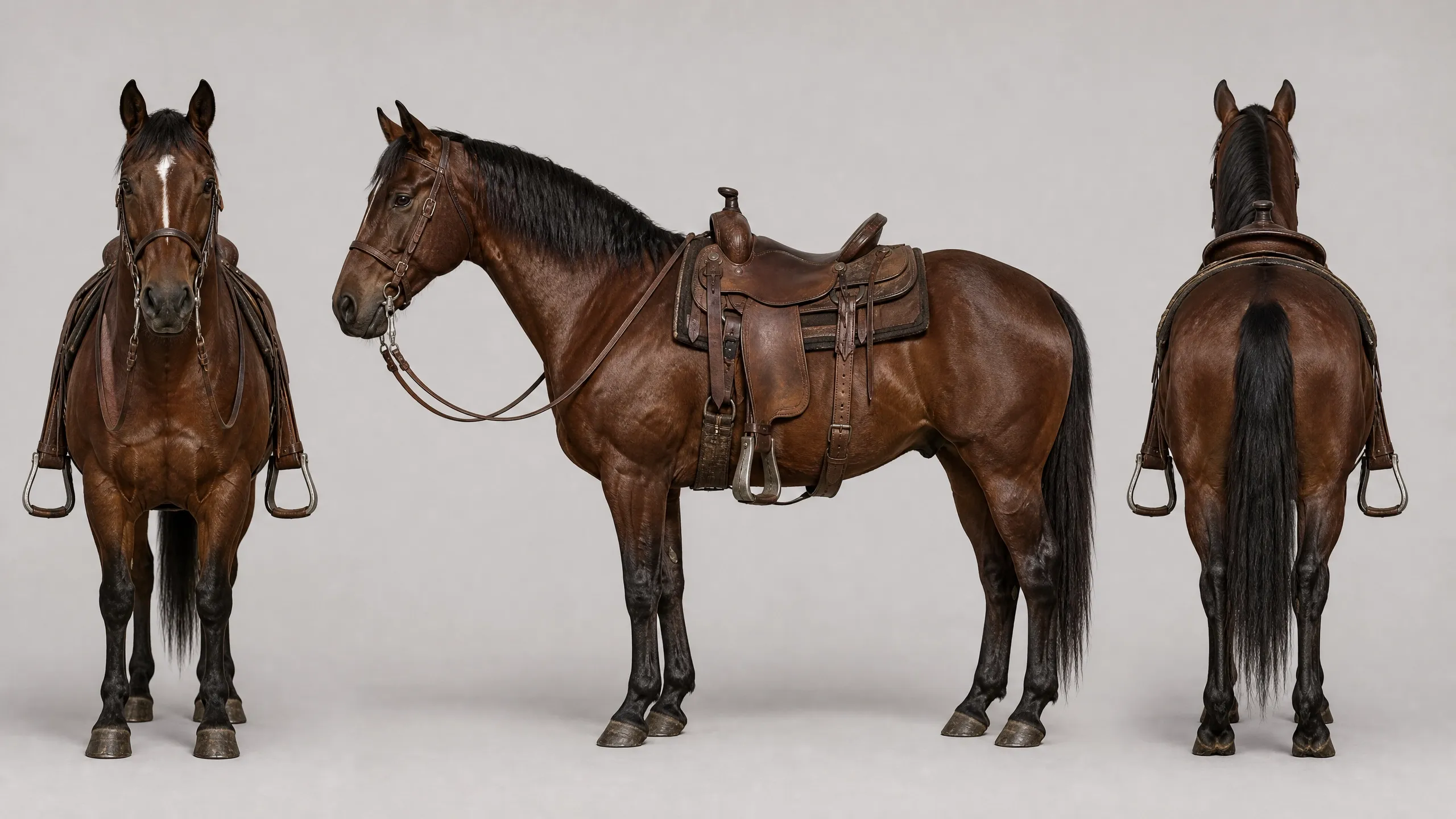
Create a highly realistic professional horse turnaround sheet showing exactly the same Western riding horse in three complete views arranged horizontally from left to right: front view, exact 90-degree right-side view, and back view. All three views must depict the identical horse with exactly matching anatomy, body proportions, coat color, facial markings, mane, tail, saddle, bridle, reins, stirrups, leather straps, and every piece of riding equipment. The horse is a mature American Quarter Horse with a powerful, compact, athletic Western riding build. It has a broad chest, strong shoulders, substantial neck, deep ribcage, muscular hindquarters, sturdy realistic legs, and balanced natural proportions. The anatomy must be scientifically believable and suitable for a real working and riding horse, without exaggerated racehorse proportions, fantasy anatomy, or oversized muscles. Its coat is a rich dark chestnut brown with subtle natural tonal variation across the body. The muzzle and lower legs are slightly darker while remaining part of the same natural coat pattern. The coat shows extremely fine realistic short hair, subtle highlights following the muscle structure, and slight variation caused by natural grooming and outdoor exposure. The horse has a dark brown-black mane of medium length, slightly uneven and naturally falling mostly along one side of the neck. The tail is long, full, dense, and dark brown-black with realistic individual strands and natural weight. A narrow white vertical marking runs down the center of the horse's forehead toward the upper bridge of the nose. Keep this marking slim, distinctive, and restrained rather than turning it into a large white blaze. Its exact shape, width, length, and position must remain consistent across all three views so the horse is instantly recognizable as the same animal. The horse wears a complete but understated traditional Western riding tack set. Use a dark-brown aged leather Western saddle with a clearly visible but realistically proportioned saddle horn, seat, skirts, fenders, stirrup leathers, and metal stirrups. Include a properly fitted leather cinch and saddle straps positioned according to real Western horse tack construction. The horse also wears a dark-brown leather Western bridle with realistic cheek pieces, browband, bit, reins, and small practical brushed-metal hardware. The reins hang naturally under gravity without becoming tangled or floating. All leather should show subtle creases, worn edges, small scratches, softened surfaces, and natural color variation from long-term use while still appearing well maintained. Do not use elaborate ceremonial decoration, excessive silver ornamentation, brightly colored textiles, fantasy armor, racing equipment, branding, readable text, or logos. The equipment should look like the personal tack of an experienced working Western cowboy. Front view: the horse faces directly toward the camera with its head naturally upright, ears gently forward, neck centered, chest clearly visible, and all four legs placed in a believable neutral standing position. Clearly show the narrow white forehead marking, front structure of the bridle, broad chest, front legs, and the portions of the saddle visible behind the shoulders. Side view: show a strict exact 90-degree right-side profile, not a three-quarter angle. This is the most important anatomical reference view. Clearly reveal the complete silhouette from nose and jaw through neck, shoulder, chest, ribcage, back, abdomen, hindquarters, legs, hooves, mane, and tail. The Western saddle, saddle horn, stirrup, cinch, bridle, bit, and reins must all be clearly readable from the side. Back view: the horse faces directly away from the camera. Clearly show the width and muscular structure of the hindquarters, both hind legs, rear hooves, long dark tail, back of the saddle, saddle skirts, straps, stirrups, and realistic symmetrical body alignment. The horse remains calmly standing in all three views with all four hooves naturally supporting its weight. No walking, running, rearing, turning, dramatic head movement, or action pose. Use a clean neutral warm light-gray seamless photography studio background with soft, even professional lighting and very subtle grounding shadows beneath the hooves. No landscape, desert, city street, stable, fencing, rider, props, typography, measurement guides, labels, or additional animals. Photorealistic cinematic animal asset with extremely detailed coat hair, mane strands, tail strands, eyes, muzzle texture, hooves, muscles, aged leather, stitching, brushed metal, and realistic tack construction. Maintain exactly the same scale across all three views, align all hooves along the same horizontal baseline, provide generous spacing between each view, and show the complete horse from ear tips to hooves and from nose to tail without cropping.
Example Prompt Cowboy Reference
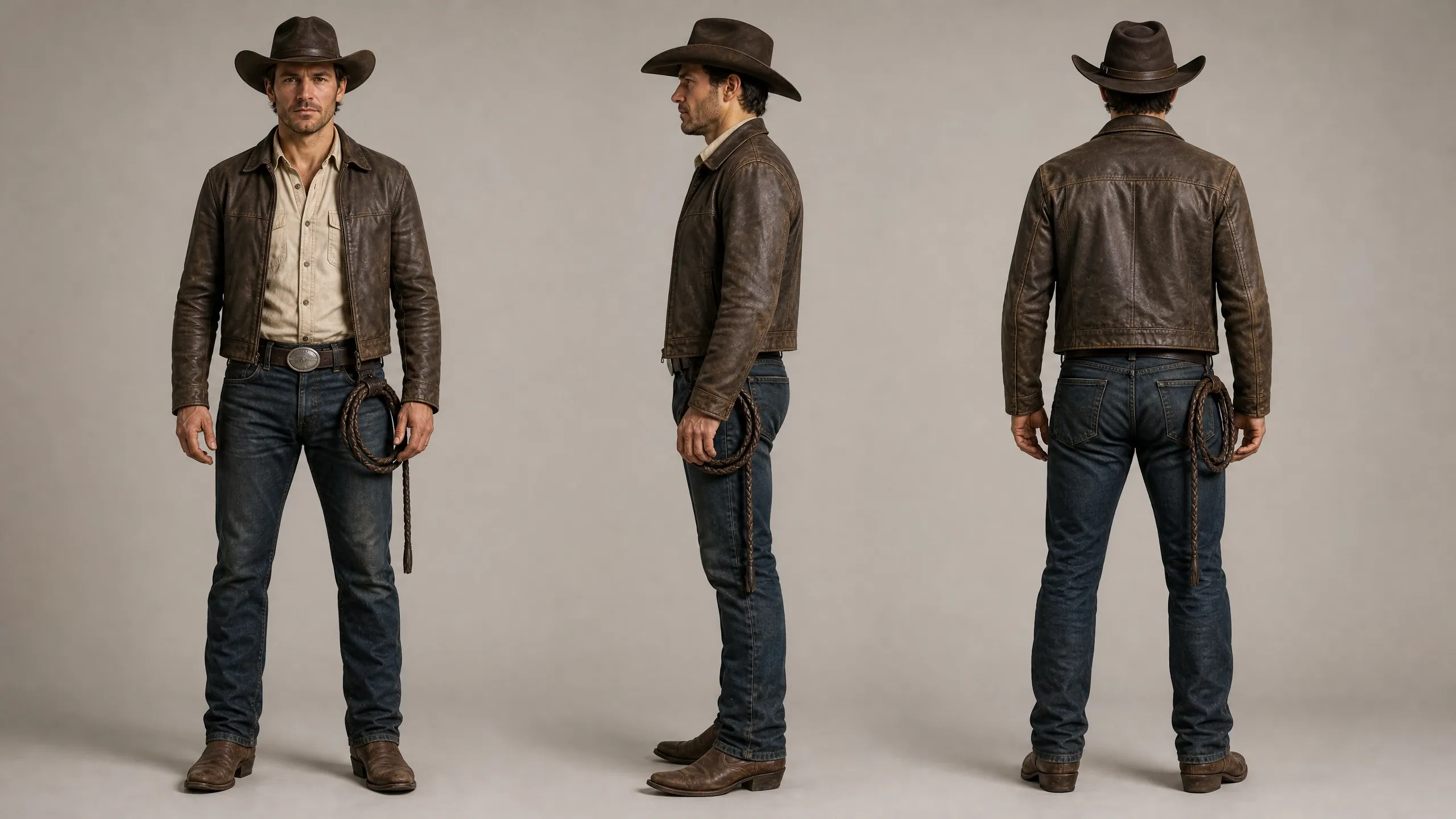
Create a highly realistic professional character turnaround sheet of the same Western cowboy, showing exactly three full-body views arranged horizontally from left to right: front view, exact 90-degree right-side view, and back view. All three views must depict the exact same man with identical facial identity, body proportions, hairstyle, clothing, accessories, materials, colors, and weathering. The character is a rugged American Western cowboy around 30-35 years old, approximately 185 cm tall, with a lean, athletic, naturally strong build shaped by years of horseback riding and outdoor work. He has broad shoulders, long legs, realistic masculine proportions, a defined jawline, slightly sun-weathered fair skin, subtle facial stubble, deep-set eyes, a straight nose, and short dark-brown hair mostly hidden beneath his hat. His expression is calm, confident, restrained, and slightly serious, giving him the authentic presence of an experienced Western rider rather than a theatrical costume character. He wears a distinctive dark-brown wide-brim Western cowboy hat with a moderately shaped crown and slightly upturned sides. The hat has realistic aged felt or leather texture, subtle dust, creases, and natural wear. The exact same hat design must remain consistent across all three views. He wears an off-white heavy cotton Western shirt with a structured collar, long sleeves, subtle natural wrinkles, and two practical chest pockets. Over it, he wears a fitted dark-brown weathered leather cowboy jacket ending around the waist, with realistic stitching, worn edges, creases, and aged leather texture. The jacket feels practical, rugged, and premium rather than theatrical. He wears dark indigo straight-leg denim jeans with subtle fading around the knees, thighs, and seams. Around his waist is a wide dark-brown leather belt with a simple oval brushed-silver metal buckle, understated and without logos or readable symbols. On his feet are traditional dark-brown Western cowboy boots with slightly pointed rounded toes, moderate riding heels, worn leather texture, and restrained embossed detailing. The cowboy's most recognizable signature accessory is a long dark-brown braided leather whip. The wrapped whip handle is secured to a leather loop on the right side of his belt. The braided whip body naturally coils once beside his right hip, then hangs downward along the outside of his right thigh, with the remaining length extending naturally toward the knee. The whip must be clearly visible and remain exactly consistent in design, length, attachment position, and hanging shape across all three views. In the back view, clearly show how the whip is attached to the belt and how the coiled section rests beside the rear-right hip. Do not include firearms, rifles, knives, modern tactical equipment, backpacks, or unnecessary accessories. His visual identity should come from the wide-brim cowboy hat, weathered leather clothing, Western boots, and especially the distinctive braided leather whip. Front view: the cowboy faces directly toward the camera in a neutral standing pose, feet naturally shoulder-width apart, both arms relaxed beside his body. Clearly show the full costume, belt, boots, and whip placement. Side view: show a strict exact 90-degree right-side profile, not a three-quarter angle. Clearly reveal the silhouette of the hat, face, shoulders, torso, jacket length, waist, belt, hips, legs, boots, and hanging whip. Back view: the cowboy faces directly away from the camera. Clearly show the back of the hat, jacket, jeans, belt, boots, and the attachment and hanging position of the whip on his right side. Use a clean neutral warm light-gray seamless studio background with soft, even professional lighting and only subtle grounding shadows beneath the boots. No environment, horse, props, typography, labels, measurement guides, borders, or additional characters. Photorealistic cinematic character asset, realistic human anatomy, authentic skin pores and subtle imperfections, natural hair strands, highly detailed aged leather, cotton, denim, brushed metal, stitching, dust, and material wear. All three figures must have exactly the same height and scale, with their feet aligned on the same horizontal baseline and generous spacing between each view. Full body visible from the top of the cowboy hat to the soles of the boots, without cropping. Review both sheets before animation. The horse should keep the narrow white forehead marking, dark chestnut coat, and complete Western tack. The cowboy should keep the same face, weathered brown jacket, hat, boots, and whip placement in all three views.
Step 2: Turn the Reference Images Into a Video
Upload both finished turnaround sheets and set the canvas to 9:16 at 24 fps for a 15-second result. The prompt fixes the camera to a chest-mounted 16 mm ultra-wide perspective, keeps every vehicle moving in the same direction, and relies entirely on live environmental sound.
Example Prompt Image to Video
Reference only the raw FPV GoPro camera angle, violent kinetic impacts, dynamic car displacement, and effortless cowboy pacing. 9:16 vertical, 24fps, 15s. No sparks, no background music, 100% live diegetic audio.Environment & Scene: Bright natural daylight at Tokyo's Shibuya Crossing under an overcast daytime sky. Extremely dense, gridlocked modern traffic with buses, taxis, and cars bumper-to-bumper. Clear sunlight vividly highlights all physical destruction and dynamic car skids.Character & Camera Specs: Chest-mounted 16mm ultra-wide FPV camera angle. The bottom of the frame reveals the rider's arms in a brown worn leather jacket, a gloved left hand holding leather reins, a free right hand holding a whip, and a dark bay horse's head bobbing rhythmically up and down. Attitude: The cowboy remains completely calm and silent throughout, executing attacks effortlessly without panting, grunting, or vocal strain.Spatial Consistency Rules: All vehicles must strictly face forward and drive parallel in the same direction as the horse. No cars facing backward or driving against traffic. All drivers face forward.0-3s: FPV 16mm ultra-wide camera from a bay horse saddle in dense Shibuya daylight traffic. The cowboy effortlessly punches a white bus's side window with a gloved right fist, shattering glass instantly, then delivers a powerful spur-kick to the metal body. Impact: Glass shatters into a daylight shower, and the bus door caves in with a deep dent; the immense kick force causes the massive bus to jolt and slide forward slightly, tires screeching on the asphalt. The cowboy shows no vocal strain or heavy breathing. Audio: Heavy horse hoofbeats, glass shattering, metallic crunch, tire screech, screaming bus passengers, wind roar.4-8s: Galloping forward between gridlocked cars. The cowboy side-kicks a black SUV door with tremendous physical power. Impact: The SUV door caves in deeply, and the kick propels the SUV sliding forward several feet along the asphalt; inside, the driver frantically grips the steering wheel to regain control. Audio: Deep hollow metal impact, tires skidding on asphalt, blaring car alarm, chaotic honking.9-12s: Weaving through forward-moving traffic. The cowboy cracks his whip across a gray sports car's hood, then kicks its fender. Impact: The fender crumples severely, pushing the sports car sliding forward into the lane ahead, its bumper lightly bumping the vehicle in front. Audio: Sharp whip crack, loud metal crumpling, secondary bumper thud, driver shouting in panic.13-15s: Horse slows next to a parallel red sedan. FPV captures the driver still frantically holding the steering wheel in shock. The cowboy smoothly reaches into the open window, snatches a canned coffee without breaking stride, and gallops effortlessly away into Shibuya's daylight street. Audio: Driver's profane shout, fading heavy iron hoofbeats.Check each time block before assembling the final cut. The horse's head and the rider's arms should stay visible at the bottom of frame, vehicle direction must remain consistent, and the soundscape should contain no music or added score. If one segment drifts, regenerate that segment instead of changing the whole sequence.
Stop Switching Tools. Start Creating.
Join 10M+ creators using Pollo AI to generate scroll-stopping videos and images — all in one place, with every top model.
Start Creating Free
Final Summary
The final video depends on three controls: stable horse and cowboy references, strict FPV camera framing, and consistent traffic direction across all four time blocks. Keeping the sound diegetic and the rider silent reinforces the raw action-camera feel.
Ready to build your own cinematic sequence? Start with the Pollo AI Video Generator.