
Animal Replacement Singing Studio VIDEO Breakdown (Prompts Included)
Recreating this animal replacement singing scene works best when the supplied video controls the complete 29-second structure and the two animal images control identity only. Keep the left and right positions, central hanging microphone, orange studio, fixed camera, singing gestures, interaction order, and final wide shot unchanged. The animals should perform the original human choreography visually while the generated result remains silent.
Tutorial
Head to Pollo.ai for video generation, featuring the Seedance 2.5 Reference-to-Video mode.
Upload the 2 prepared reference images as your character identity references. Then upload a video as the motion reference — you can use my video as the reference source asset for movement, camera work, timing, and environment.
Paste the video prompt below, and add @your reference image and @reference video tags inside the prompt to link your assets. Select the Seedance 2.5 model, confirm all settings, then click Generate.
Note: Use the video for the complete video structure and motion reference, the first picture for the left replacement animal, and the second picture for the right replacement animal.
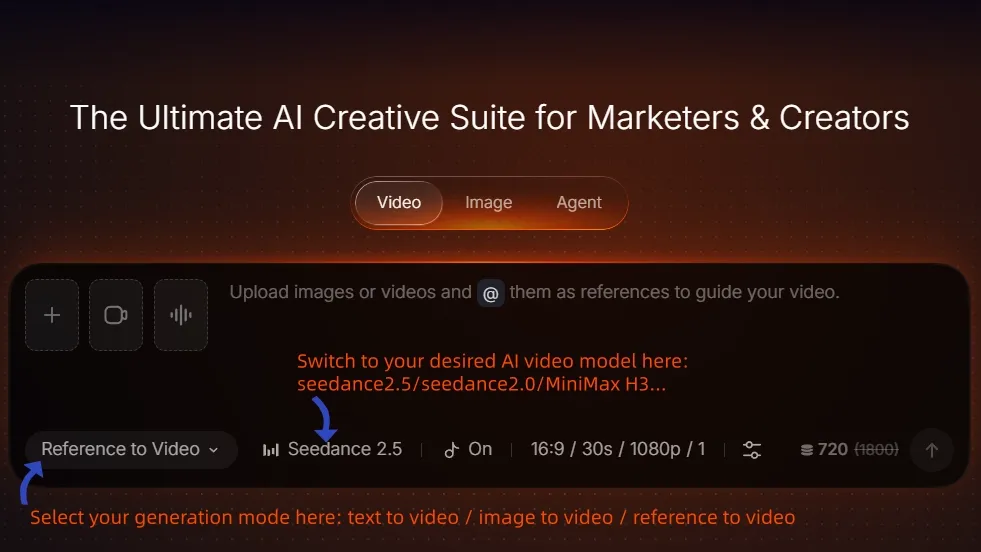
Image Generation Screen
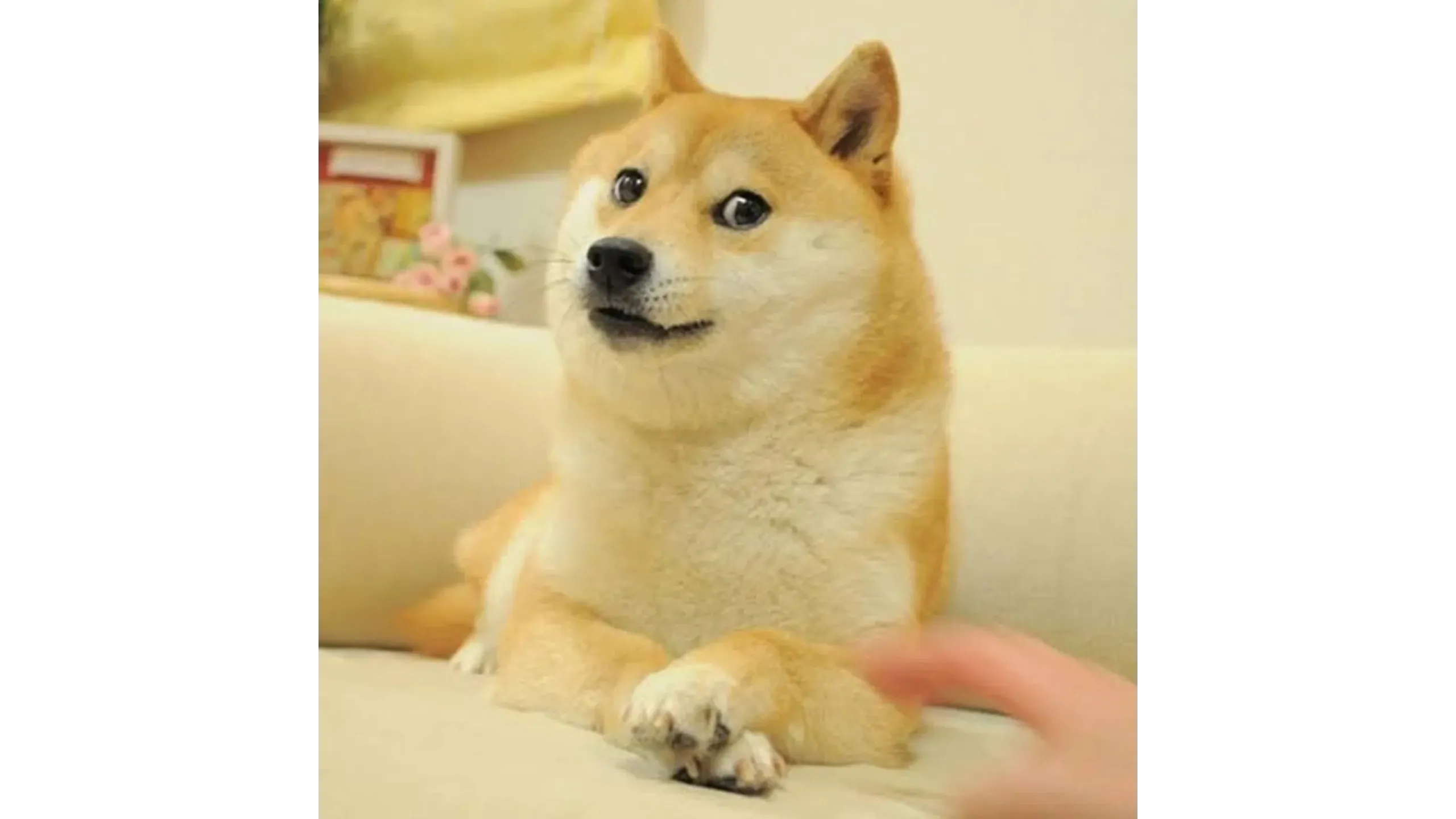
Reference Image①
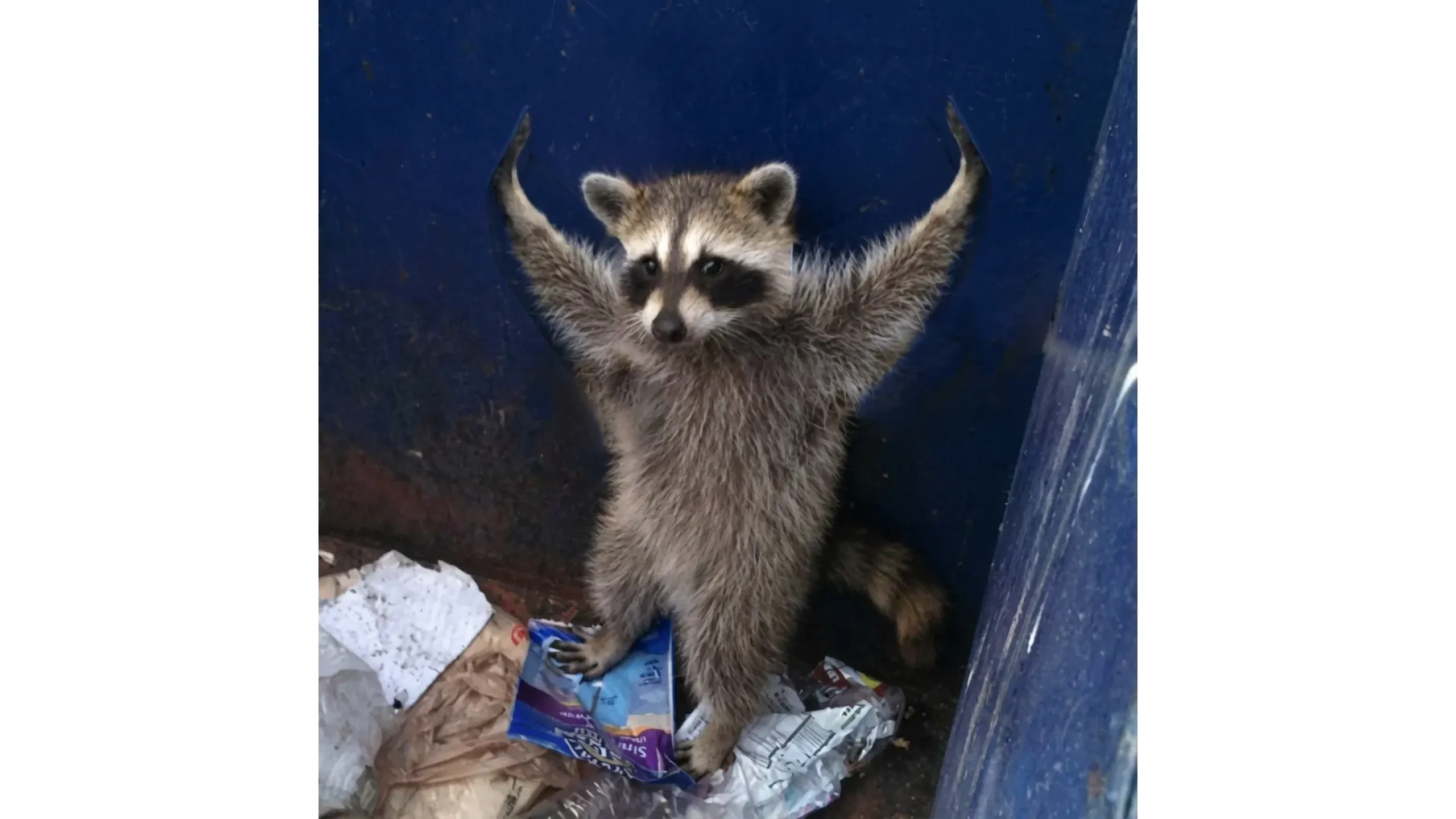
Reference Image②
Video Prompt: Two-Animal Singing Studio Replacement
REFERENCE USAGE:
Create a new exactly 29-second, 4:3 video using the video as the only video structure and motion reference. Reproduce the reference video's complete timeline, fixed camera, shot order, framing, lens behavior, camera distance, focus, lighting, studio layout, character scale, left-right positions, interaction order, singing rhythm, head movements, hand gestures, body swaying, and final wide shot.
Use picture 1 only as the identity reference for the animal replacing the performer on the left side. Use picture 2 only as the identity reference for the animal replacing the performer on the right side. Do not transfer either reference image's original background, objects, lighting, or scenery into the video.
GLOBAL REPLACEMENT RULE:
Replace only the two original performers. Remove the original human performers completely from every frame and replace them with the two specified animals. Keep every other part of the reference video unchanged, including the orange photography studio, fixed camera, central hanging microphone, microphone position, studio lighting, floor and background, composition, shot scale, timing, and ending composition.
Do not add a third performer, an extra animal, a duplicate animal, a clone, a merged character, a swapped position, or any new prop. The left replacement must remain on the left for the entire video. The right replacement must remain on the right for the entire video. Keep both characters stable and recognizable from the first frame to the last.
LEFT REPLACEMENT CHARACTER:
Use picture 1 as the only identity reference for the left-side character. Preserve the exact tan-and-cream Shiba Inu appearance: warm golden-tan fur, cream muzzle and chest, upright triangular ears, dark round eyes, black nose, compact dog head, short dense coat, recognizable facial proportions, and the same overall body identity from the reference image.
Remove the original image background and use the dog as a clean subject reference only. Make the Shiba Inu stand naturally upright in the left performer's position while remaining a complete recognizable dog with fur, canine head, muzzle, ears, paws, legs, and tail. Do not turn it into a human, humanoid mascot, or generic dog.
The left Shiba Inu must inherit the left original performer's complete visual performance: singing mouth shapes, facial expressions, head movements, eye direction, hand and arm gestures translated into anatomically plausible front-paw gestures, body swaying, timing, interaction cues, and movement trajectory. Match the original rhythm precisely while preserving the Shiba Inu's face, fur, ears, eyes, body proportions, and species identity.
RIGHT REPLACEMENT CHARACTER:
Use picture 2 as the only identity reference for the right-side character. Preserve the exact small brown-gray raccoon appearance: dark eye mask, pale facial markings, rounded ears, black nose, gray-brown shaggy fur, compact raccoon head, recognizable facial proportions, and ringed tail. Keep the animal's distinctive face, fur pattern, ears, eyes, body shape, and overall identity stable.
Remove the original image background and use the raccoon as a clean subject reference only. Make the raccoon stand naturally upright in the right performer's position while remaining a complete recognizable raccoon with fur, rounded ears, raccoon muzzle, paws, legs, and tail. Do not turn it into a human, humanoid mascot, or generic mammal.
The right raccoon must inherit the right original performer's complete visual performance: singing mouth shapes, facial expressions, head movements, eye direction, hand and arm gestures translated into anatomically plausible front-paw gestures, body swaying, timing, interaction cues, and movement trajectory. Match the original rhythm precisely while preserving the raccoon's face, fur, ears, eyes, body proportions, and species identity.
STUDIO, CAMERA, AND COMPOSITION:
Keep the exact 4:3 orange photography-studio environment from the video. Preserve the warm orange background, studio lighting direction, brightness, shadows, color temperature, fixed camera placement, camera height, lens perspective, framing, focus, and image scale. The shot must not become handheld, cinematic, widescreen, vertical, cropped, zoomed, or reframed.
Keep the central hanging microphone exactly where it appears in the reference video. Preserve its height, scale, cable, angle, visibility, and relationship to both performers. Do not duplicate, move, resize, redesign, remove, or replace the microphone. The microphone is a fixed studio prop and remains part of the original composition.
Maintain the original left-right staging at all times: the Shiba Inu remains on the left, the raccoon remains on the right, and the microphone remains centered between them. Preserve the original spacing, eye lines, body scale, occlusion relationships, and interaction distance. Do not allow either animal to drift into the other character's position.
MOTION AND PERFORMANCE:
Follow example video frame by frame for the complete 29-second timeline. Preserve the original singing rhythm visually, including every mouth movement, head nod, facial reaction, hand gesture, paw gesture, shoulder movement, torso sway, turn, lean, pause, glance, interaction beat, and return to the original pose.
The two animals must move as if they are performing the original song together, but the result must contain no generated sound. Reproduce the singing visually through accurate mouth articulation and performance timing only. Keep the interaction order exactly as shown in the reference video. Do not improvise new choreography, new reactions, new dance moves, or new contact between the characters.
Use anatomically plausible animal motion. Front paws may perform the same broad gesture paths as the original hands, but they must remain paws with correct fur, joints, shape, and number. Preserve natural canine and raccoon anatomy while allowing the upright performance required by the reference choreography.
TIMELINE AND ENDING:
Reproduce the complete 29-second timeline without shortening, extending, skipping, repeating, or reordering any moment. Keep the original fixed-camera coverage and every change in expression, gesture, body sway, and interaction in the same order and at the same relative time.
Preserve the exact ending wide shot from the example video. The final frame must show the same orange studio, the same two-character left-right arrangement, the central hanging microphone, the same camera distance, the same lighting, and the same final animal poses. Do not end on a close-up, freeze frame, transition, fade, or newly invented composition.
OUTPUT AND AUDIO:
Generate a clean silent video image only. Do not generate dialogue audio, singing audio, music, sound effects, room tone, microphone sound, narration, or any other audio. The visual performance should retain the original singing rhythm and mouth movements even though the output contains no sound.
Use realistic, visually coherent animal fur, facial movement, paw motion, body weight, and contact with the studio floor. The result should be photorealistic, restrained, and humorous because of the species replacement, not because of added visual effects or cartoon distortion.
NEGATIVE PROMPT:
Original human performers, human faces, human skin, human hands, human fingers, human bodies, human clothing, performer identity remnants, face blending, character fusion, animal swapping, left-right position exchange, duplicated animals, cloned animals, third animal, extra limbs, missing limbs, duplicated paws, missing paws, malformed paws, extra heads, extra tails, missing tails, altered animal identity, generic dog, generic raccoon, wrong dog breed, wrong raccoon markings, changed fur color, changed ears, changed eyes, changed muzzle, distorted face, elongated snout, human-like face, mascot costume, humanoid animal, cartoon style, illustration, puppet appearance, plastic fur, unstable fur, flickering identity, body deformation, broken anatomy, floating paws, impossible joints, unnatural upright posture, exaggerated gestures, invented choreography, changed interaction order, changed mouth timing, silent mouth movement mismatch, random lip sync, camera movement, handheld camera, zoom, pan, reframing, wrong lens, wrong shot scale, wrong aspect ratio, vertical video, widescreen crop, missing orange studio, changed studio color, changed lighting, missing central hanging microphone, duplicated microphone, moved microphone, redesigned microphone, added props, removed props, background replacement, scenery change, visual effects, particles, glow, smoke, subtitles, captions, text, logo, watermark, title card, audio, dialogue, singing sound, music, sound effects, narration, room tone, short video, extended video, skipped moments, repeated moments, reversed motion, different ending, freeze frame, transition, fade-out.
Final Summary
Create one exactly 29-second, 4:3 silent reference-to-video replacement scene. Use the supplied video, referred to the source prompt, as the sole structure and motion reference. Replace only the left original performer with the tan-and-cream Shiba Inu from picture 1 , and only the right original performer with the brown-gray raccoon from picture 2.
Preserve the orange photography studio, fixed camera, central hanging microphone, lighting, left-right staging, full singing-performance rhythm, head movements, paw gestures, body swaying, interaction order, complete timeline, and final wide shot. Keep both animals photorealistic, stable, recognizable, and anatomically coherent. The output must contain visuals only with no sound, text, logo, watermark, or added effects.