

What Are the Best Times to Post on TikTok?: A Detailed Guide for 2026
Posting on TikTok can sometimes feel like trying to jump onto a moving train. If you mess up the timing, it can be a disaster because your video will simply fall into obscurity.
Given how exhausting it can be to create just one video, none of us wants to waste all that time and hard work, right? So, what you need is to nail the best times to post on TikTok.
This means factoring in the algorithm, audience activity, trends, etc. Read on, as we unpack how to schedule your TikTok content strategically and even how Pollo AI can help you.
TL;DR
Post timing significantly impacts initial engagement on any TikTok. High initial engagement tells the algorithm that your TikTok is worth sharing. According to Buffer, the best times are Sunday 9 AM, Monday 1 PM, and Sunday 1 PM. Meanwhile, Sprout Social states the best times are Tuesdays - Thursdays between 2 PM and 6 PM. Use these average times as a baseline to experiment, then review account analytics to pinpoint the best time for your TikTok audience.
How Does TikTok’s Algorithm Impact Your Post Timing in 2026?
The first and most important thing for you to understand is how TikTok’s algorithm works. In 2026, its focus is set on pushing videos with high watch completion and engagement.
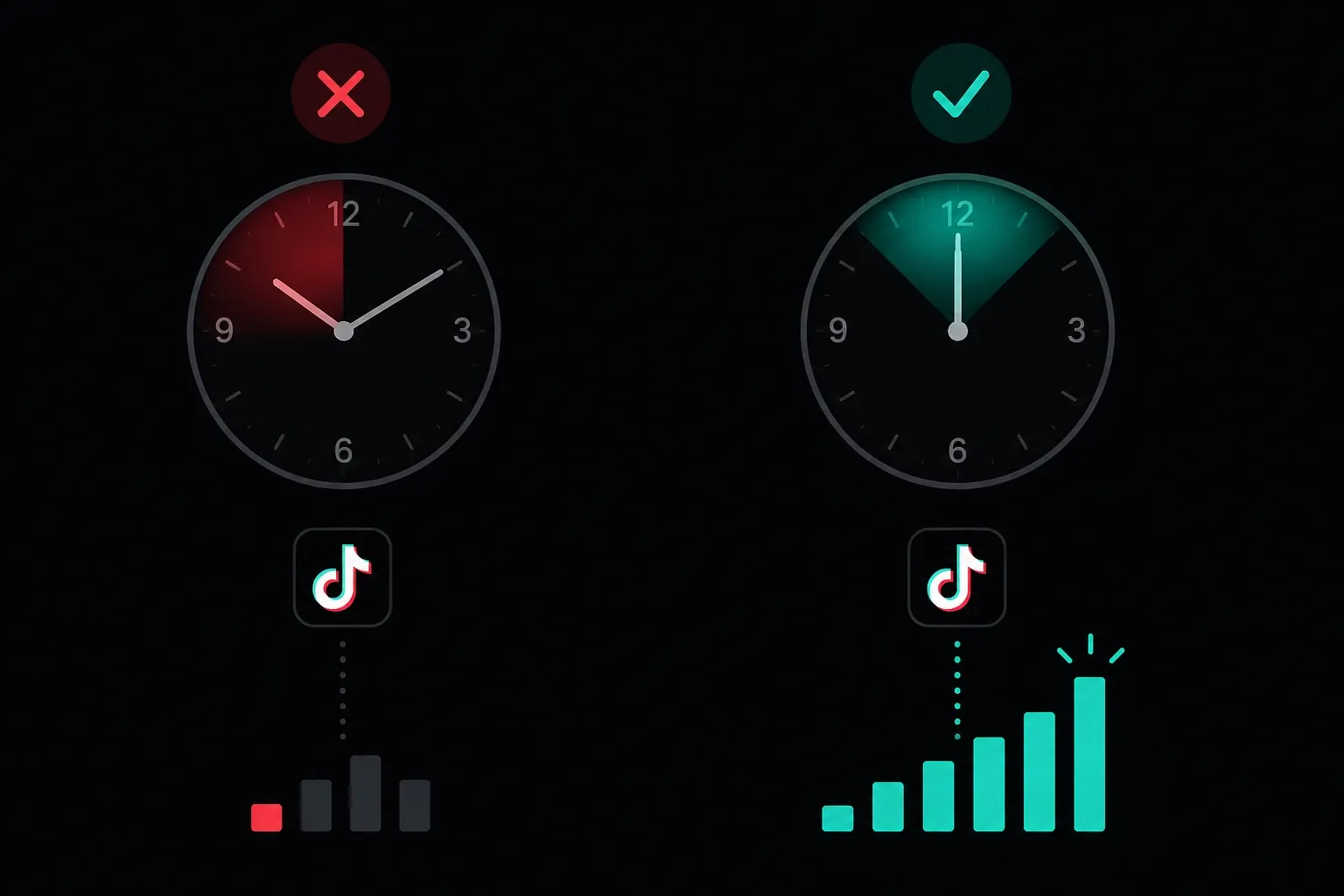
So, how does your posting schedule factor into this? Simple. The amount of engagement that your video receives in the first hour of posting is the catalyst that the algorithm looks at.
Once you post on TikTok, the algorithm shares your video with your followers first. If it performs well within those first 60 minutes, then your content is pushed to a broader audience.
But if it doesn’t perform well, then the TikTok gets suppressed, even if the content quality was good. This is why knowing when your audience is most active is so critical.
If you can frequently nail the right time to post your TikToks, then you will maximize engagement per video. From there, your videos will start being amplified on the For You page more often.
And that can be your fast-track to going viral on TikTok! It also helps to capitalize on powerful tools like Pollo Agent, for example. With this, you can clone trending TikToks in minutes.
Just paste the video’s URL and describe exactly the changes you want via chat. As an iterative, agent-driven tool, it will automate the production, so no manual editing is needed.
Plus, it tracks references, visual direction, and edits in one seamless workflow, so you won’t need to start over to make changes. In minutes, you can have a polished, publish-ready TikTok.
Ultimately, the point we're making is that you need to optimize your TikTok posting schedule to hit the engagement nail on the head. So, let’s break those timings down, shall we?
Create Viral TikTok Videos with Pollo AI
Turn your ideas into engaging TikTok videos in minutes. Generate trend-ready content with AI to keep posting consistently and grow your audience faster.
Create TikTok Videos with Pollo AI
What Are the Best Times to Post on TikTok in 2026?
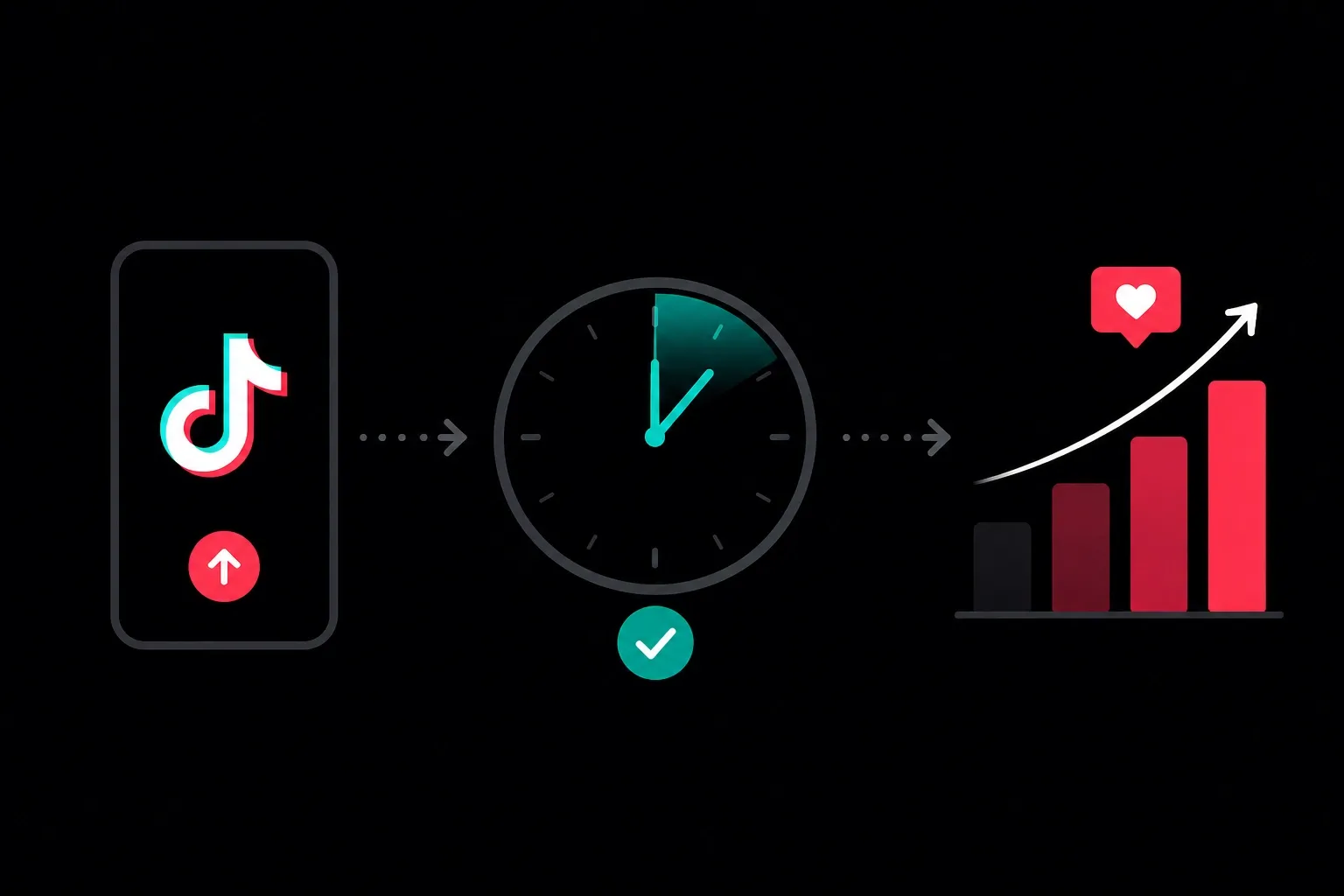
Unfortunately, there isn’t a universal schedule that guarantees peak engagement on TikTok. After all, audience behavior is ever-changing, so it’s never the same for multiple accounts.
But the good news is that there are certain times that we can use as a general baseline. In that respect, there are several case studies that offer us a consensus based on trends.
On one hand, Buffer conducted a data test based on 7.1M+ TikTok posts published through their platform. And using that data, they pinpointed a few common patterns.
According to them, the best time to post is Sunday at 9 AM, Sunday at 1 PM, and Monday at 1 PM. They also found that evenings around 6 PM and 11 PM show the highest engagement.
And it makes sense because these are the general hours of the day when most of us can spare some focus and attention to consume video content.
On the other hand, Sprout Social conducted their own tests. Based on 2B+ engagements across 307K social profiles, Tuesdays - Thursdays between 2 PM and 6 PM are the best times.
What’s more? They say that Saturday and Sunday are the worst days to post because most people are offline. To them, it’s all about aiming for the midweek surge.
Now, we can agree that these results are conflicting, right? Yet, we can still combine these two sources to create an aggregated posting schedule. So, here’s our take:
Day of the Week | Best Times to Post on TikTok (Estimate) |
| Monday | 1 PM, 3-5 PM |
| Tuesday | 2-6 PM |
| Wednesday | 1-8 PM |
| Thursday | 1-5 PM |
| Friday | 3-5 PM |
| Saturday | Low engagement day |
| Sunday | Low engagement day |
How To Find Out the Best Times to Post on TikTok For You?
As insightful as those tests from Sprout Social and Buffer are, they still don’t give us a definitive answer. It’s a good starting point, but that’s it.
Every audience is different, so if you truly want to know the best times to post on TikTok, then you must look at your account analytics. So, here’s what you need to do:
#1. Switch to a TikTok Business/Creator Account
To get detailed analytics, you have to switch over to a TikTok business or creator account. You can do this by heading to Menu > Settings and Privacy > Account.
#2. Open TikTok Studio Analytics
Once you open TikTok Studio Analytics, head to Activity > Followers. Here, you’ll get to see a heatmap of your peak engagement times.
#3. Experiment & Track Performance
After that, you must test out these times to see what truly works. On separate days, post at the peak times we’ve listed here and on other days at the peak times shown on your insights.
If you need help creating extra TikTok content for these tests, you can use Pollo AI Avatar to generate lifelike talking head videos with accurate lip-sync and natural voiceovers.
#4. Review & Schedule
After 1-2 weeks, you should have a clear idea of the specific times that produce the best results for your TikTok account based on audience behavior. It’s that easy!
What Other Factors Usually Impact TikTok Engagement?
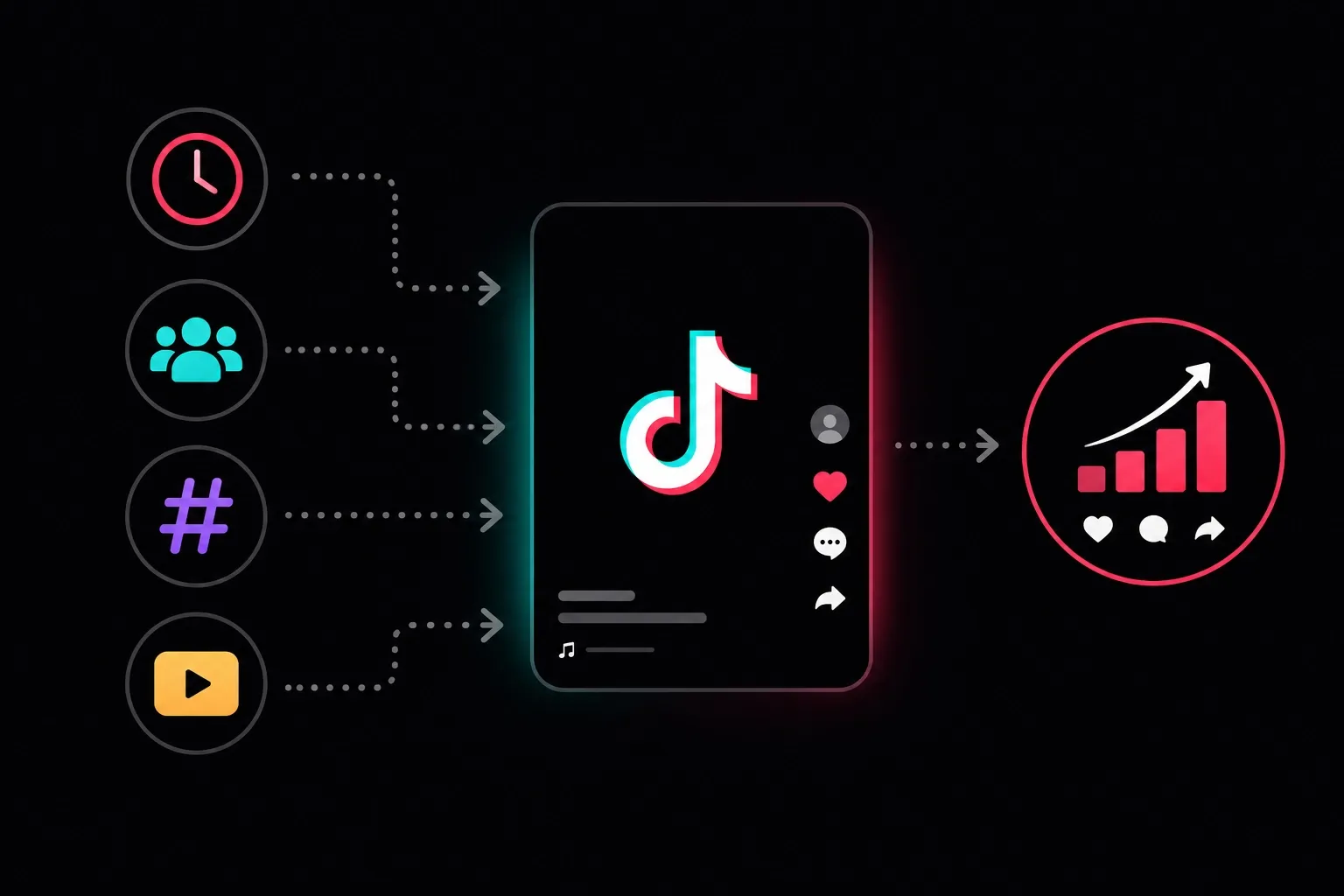
Having said that, there are still other key factors that the TikTok algorithm looks at. Aside from the post timing, you also have to worry about watch time completion.
The algorithm rewards TikToks that can hold viewer attention the longest. In other words, raw views or how often you post videos is not as important as quality and retention.
Another key factor is niche specificity. The TikTok algorithm often favors niche content because it’s much easier to categorize and recommend it to the relevant audiences.
This is why it’s important to avoid being too broad and to be consistent with your content themes. By sticking to one lane, you can make a bigger impact than by scattering yourself.
Another factor is trending audio. We’ve all seen many creators placing trending audio in their videos, which is often a strategic way for them to improve post visibility.
After all, when a song or audio is going viral, it can be fun to see what other creators are using it for. Just make sure the trending audio complements the video rather than overshadows it.
What To Do If Your TikTok Performance Is Still Inconsistent?
Even after you pinpoint the optimal peak times for engagement, there’s still a chance that you will be faced with inconsistency in content performance. But this is normal.
All accounts, including top creators, have to deal with underperforming posts. Sadly, none of us can predict how TikTok’s algorithm will react, especially since it’s constantly adapting.
What may work one week may flop the next week. The best strategy is to treat every successful and underperforming post as an experiment of sorts.
Ask yourself: Why did this post work or why didn’t it? At times, the timing may be great, but the video topic may have failed to resonate with audiences, or vice versa.
But most importantly, try to be consistent with your posting. If you’re a growing channel, you can try to aim for 2-3 TikTok posts per week to maintain visibility on people’s feeds.
And if you ever find yourself struggling to create enough content, then consider automating your video production using the Pollo AI image to video tool.
You can use it to create supplementary TikToks that support your main content. For example, animated shorts, cinematic sequences, 3D scenes, etc. Feel free to experiment with any ideas.
Conclusion
The harsh truth that we all must face is that there isn’t a magical TikTok hour that works for everyone. We all have different audiences that behave differently.
Luckily, the times we’ve listed here can be a fantastic baseline to start experimenting from. Just keep posting and reviewing your TikTok analytics until you nail the perfect window.
And don’t forget that TikTok requires consistent posting for visibility. So, make use of Pollo AI to rapidly scale UGC-style content, product demos, tutorials, animations, and more!