

Kaze AI Review: I Tested Kaze AI for Image Generator For Weeks, And Here’s What I Found
Kaze AI is worth trying if you want a fast AI image generator for portraits, social visuals, product photos, background edits, and quick creative ideas.
I like Kaze AI most when it works like a simple visual assistant. You can upload an image, describe what you want, and get a cleaner result without learning a complex design tool. But it is not perfect. Kaze AI still needs review when the image involves faces, product details, hands, or brand-sensitive visuals.
Kaze AI Review: TL;DR
Kaze AI is a solid AI image generator for users who want fast visual creation, simple photo editing, and prompt-based image fixes. Its best idea is making image work feel less technical. You can describe the edit you want, change the background, clean up a photo, or create a polished portrait without learning a heavy design tool.
The catch is that Kaze AI still works best for quick image tasks, not full creative production. You may get clean, useful visuals, but product details, faces, edges, and brand-sensitive images still need review before you use them in a real project.
Review Criteria | Verdict |
|---|---|
| Prompt-Based Editing | Strongest area. Easy to use for simple photo edits and style changes. |
| Image Generation | Good fit for quick concepts, social visuals, and creative drafts. |
| Background Cleanup | Useful for portraits and product images, but complex edges need checking. |
| Ease Of Use | Beginner-friendly and much easier than manual editing tools. |
| Business Workflow | Helpful for single images, less complete for full campaigns. |
| Best Fit | Creators, small sellers, students, social media users, and casual visual makers. |
What Is Kaze AI?
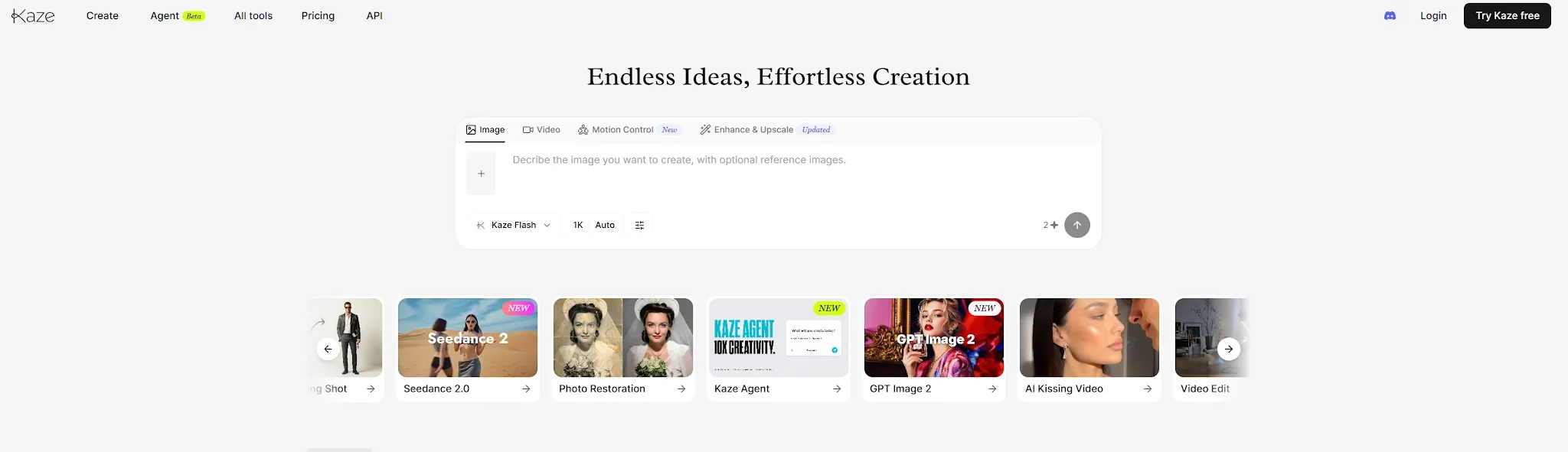
Kaze AI is an AI image generator built for people who want to create, edit, and improve images without using a traditional design tool.
Instead of giving you a blank canvas or a long editing panel, Kaze AI works more like a visual assistant. You upload an image, describe the change you want, and let the tool handle the first version for you.
That makes it different from a basic photo editor. Kaze AI is not only asking, “What do you want to fix?” It is asking something closer to, “What should this image become?”
In my testing, that made Kaze AI useful for quick visual work. It helped me turn rough image ideas, casual photos, and simple product shots into cleaner visuals without spending time on manual edits.
Kaze AI At a Glance
Category | My Take |
|---|---|
| Best For | Quick image generation, photo edits, portraits, and background cleanup |
| Main Strength | Simple prompt-based visual editing |
| Ease Of Use | Beginner-friendly |
| Output Quality | Good for casual, social, and light business use |
| Best Users | Creators, students, small sellers, and social media users |
| Biggest Limit | Less ideal for strict brand control or full content workflows |
What Are Kaze AI’s Best Features?
Kaze AI’s best features are prompt-based editing, AI image generation, background cleanup, and image enhancement.
1. Prompt-Based AI Editing
Prompt-based editing is the easiest part of Kaze AI. You can type a simple request like “make the background cleaner” or “turn this into a professional portrait.” Kaze AI then applies the edit for you.
I like this because it matches how normal users think. Most people do not think in editing steps. They think in outcomes. This makes Kaze AI useful for quick visual tasks. You can improve a profile photo, clean up a product image, or test a new style without opening a heavy design app.
The limit is precision. If your prompt is too vague, the result may look generic. If your prompt is too complex, Kaze AI may miss small details. So it works best when your instruction is clear and simple.
2. AI Image Generation
Kaze AI also works as an AI image generator. This is useful when you do not already have the right image. You can start with a prompt and test different visual ideas.
I found this helpful for social visuals, creative concepts, and fast design drafts. It lowers the pressure of starting from a blank page. Still, Kaze AI feels better for quick visual exploration than deep creative control. If you want more model choice and broader creative workflows, you may also want to try a dedicated AI image generator.
Kaze AI is good for fast starts. Pollo AI is better when image generation is part of a larger content workflow.
3. Background and Object Cleanup
Kaze AI is useful for cleaning up distracting image elements.
This includes messy backgrounds, unwanted objects, simple text, or visual clutter. These are everyday problems for creators and small sellers. In my testing, this worked best with simple images. A plain wall, clean product shot, or clear portrait usually gave better results.
More complex images need review. Hair, hands, glass, shadows, and product edges can still look uneven. For users who mainly need background work, a dedicated background remover may feel more direct. If you need to remove a specific item, an object remover is also useful.
4. Image Enhancement and Portrait Edits
Kaze AI is helpful when you want an image to look sharper and more polished.
This works well for profile photos, old images, low-quality visuals, and casual product photos. It can improve clarity, lighting, and overall presentation. The portrait use case is especially easy to understand. Many users want a better profile photo, but they do not want to book a photo shoot.
Kaze AI can make a casual photo look cleaner. It can adjust the background, improve the lighting, and create a more professional feel. But I would still check the face carefully. A good AI portrait should still look like the real person. If it feels too smooth or too different, I would not use it for a serious profile.
For quality upgrades, an image enhancer or image upscaler can also be useful.
What Are Kaze AI’s Pros and Cons?
Kaze AI is strong for fast image work, but it still has limits.
Pros:
- Easy to use with simple prompts
- Good for quick image generation
- Helpful for background cleanup
- Useful for portraits and profile photos
- Good for casual and social visuals
Cons:
- Detailed edits may need several tries
- Not ideal for strict brand control
- Complex edges still need review
- Some results can look too AI-like
- Less complete than a full creative suite
Where Does Kaze AI Fall Short?
Kaze AI falls short when you need exact control and repeatable results.
The Output Still Needs Review
Kaze AI is fast, but the first result is not always final. This matters for product images, portraits, and business visuals. A small detail can affect trust. A face may look slightly different. A product label may lose clarity. A background edge may look rough.
This is not a major problem for casual use. But it matters for commercial work.
Prompt Quality Still Matters
Kaze AI feels simple, but your prompt still affects the result. A vague prompt gives the AI too much freedom. A clear prompt gives it a better direction.
For example, “make it better” is too broad. “Make the product photo brighter and keep the original label” is much better. So the learning curve is not technical editing. It is visual direction.
It Is Not a Full Creative Workflow
Kaze AI is useful for single images. But it does not feel like a full creative production system. If you need images, videos, AI virtual try-on, avatars, audio, and ad-ready content, you may need more than Kaze AI.
That is where Pollo AI feels stronger. It covers more parts of the content workflow in one place.
How I Tested Kaze AI
I tested Kaze AI across common image tasks that real users care about.
I looked at how it handled:
- AI image generation from text prompts
- Photo editing with simple instructions
- Background changes and cleanup
- Object removal
- Image enhancement
- Portrait and headshot-style edits
I focused on practical results, not just feature names. A tool can look strong in a demo but still fail in real use. A portrait may look too smooth. A product image may lose small details. A background may look clean at first, but still have rough edges.
So I kept asking one question: can Kaze AI help users get a better image faster? My answer is yes, but not in every case.
Is Kaze AI Right for You?
Kaze AI is right for you if you want fast image generation and simple photo editing. Use it if you need profile photos, social visuals, background cleanup, casual product edits, or quick image enhancement. Skip it if you need strict brand consistency, deeper model control, or full campaign production.
The simplest way to think about it is this: Kaze AI is a fast image tool. Pollo AI is a broader creative suite.
How Does Kaze AI Perform Across Real Use Cases?
Kaze AI performs best when the task is clear and visual.
Use Case | My Take |
|---|---|
| Social Media Images | Good fit. It helps create and polish simple visuals fast. |
| Profile Photos | Strong fit. Portrait edits can look clean if the source image is clear. |
| Product Photos | Useful for light cleanup, but details need review. |
| Background Removal | Good for simple images. Complex edges need checking. |
| Image Enhancement | Helpful for improving weak or low-quality visuals. |
| Marketing Campaigns | Useful for single assets, but not enough for full campaigns. |
Why Is Pollo AI a Better Kaze AI Alternative?
Pollo AI is a better Kaze AI alternative if you want more than quick image editing. Kaze AI helps you create and improve images. Pollo AI helps you build a wider creative workflow. It covers images, videos, avatars, audio, product visuals, and editing tools in one place.
That is where Pollo AI makes more sense. Pollo AI is the ultimate AI creative suite for marketers, creators, and sellers & brands. It brings image generation, photo editor, video creation, product visuals, avatars, and audio tools into one place.
I also like that Pollo AI is organized by real use cases. Marketing Studio is for ad and campaign content. Commerce Studio is for product visuals and seller workflows. Creative Studio is for image, video, avatar, and audio creation.
For image work, you can use tools like the AI image generator, AI photo editor, and image to image AI. You can also work with models like GPT Image 2, and Nano Banana 2 That model choice matters. One model rarely handles every visual task well. Some are better for realism. Some are better for design. Some are better for stylized images.
So the difference is simple. Kaze AI is good for fast image edits. Pollo AI is better when you need a broader creative workflow without jumping between multiple tools.
Create More Commercial-Ready AI Images
Create, edit, and enhanc images across a broader AI workflow built for real creative production.
Try Pollo AI for Free
My Personal Take on Kaze AI
I like Kaze AI because it makes image editing feel less intimidating. You do not need to understand design software. You can describe the result you want and let the tool do the first pass.
But I hit the limits when I needed more control. Kaze AI is convenient for one image. It is less convincing for a full content workflow.
My take is simple. Kaze AI is a good tool for quick image generation and photo edits. It is not the only tool I would use for serious creative production.
Final Verdict: Is Kaze AI Worth It?
Kaze AI is worth trying if you want a simple AI image generator and photo editing tool. But it is not the best choice for full creative production. If your work includes brand visuals, ads, product assets, videos, and multiple content formats, Pollo AI is the stronger option.