


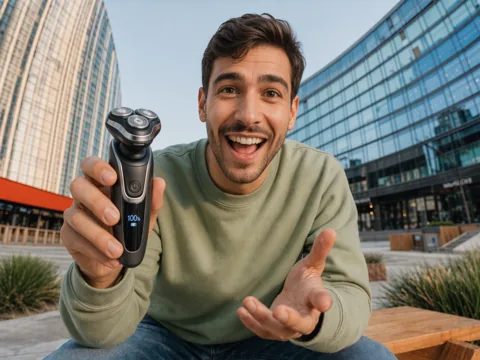
Wan 3.0 vs Seedance 2.5: Which AI Video Generator Should You Use?
Wan 3.0 and Seedance 2.5 have entered the chat, and I must say that this is the new clash of the titans within the current AI video generation space. But which AI video generator should you be using? Read on as we explore everything from features to use cases for a clear verdict!
TL;DR
I recommend Seedance 2.5 if your priority is quality control. Its capacity for 30-second scenes, strong visual continuity, expanded referencing, and sharp adherence to time-coded instructions make it ideal for creating complex cinematic or dialogue sequences.
But if you want a more cost-effective option that still offers strong character/setting consistency and realistic motion physics, then Wan 3.0 is great. I find that it works best for straightforward visualization rather than imaginative filmmaking.
Wan 3.0 vs Seedance 2.5 at a Glance
When it comes to specs, I’d say Seedance 2.5 has a lot more going for it, especially in terms of production workflow for long-form storytelling. But I must applaud Wan 3.0 for being a broad platform with stronger identity consistency, striking a better balance between value and control.
| Criteria | Wan 3.0 | Seedance 2.5 |
| Core Focus | Broad multimodal creative platform; text/image video plus image and document/web-oriented workflows. | Audio-video joint generation focused on long-form storytelling, multimodal references, and editing. |
| Max Duration per Clip | Generates native 30-second videos. | Up to 30 seconds per generation. |
| Native Audio | Supports native audio-visual with sound effects, background ambience, music, and dialogue. | Audio-video joint generation is a central capability; Audio clips can also be uploaded as references. |
| Reference Control | Supports up to 20 reference assets and document/web parsing. | Offers a wide 50-asset standard: Uploads up to 30 images, 10 videos, and 10 audio clips. |
| Video Editing | Relies on instruction-based and reference-based inputs to modify footage. | Timestamp-level edits, green screen, camera-perspective editing, and reference-based editing are explicitly announced. |
| Identity Consistency | Presents strong identity and environment retention through motion; quite stable and reliable across scenes. | Shows good consistency across characters and settings with a small number of references, but also occasional morphing/decoherence in fast action. |
| Physics and motion logic | Delivers realistic physics, collision transfer, subject locking, and coherent motion across scenes. | Generally strong motion and acting, with reported gains over Seedance 2.0, though rapid action can still morph or decohere. |
| Prompt Adherence | More conservative when prompt and image conflict; this helps faithful product/image animation but can suppress surreal transformations. | Benefits from detailed, structured prompts; handles layered prompts better than Seedance 2.0, but over-packed rapid-cut directions may not always transfer reliably. |
| Output resolution | Supports 480p, 720p, and 1080p native resolution tiers. | Suitable for commercial production with support of native 4K output. |
| API cost | Around $0.05/sec at 480p, $0.10/sec at 720p, and $0.20/sec at 1080p. | Estimates roughly $0.10–$0.12/sec at 480p and about $0.23/sec at 720p. |
Round 1: Which One Presents Better Visual Quality?
When it comes to visual quality, I find that Wan 3.0 and Seedance 2.5 are in a similar high-end tier, but the key difference is how they each prioritize different aspects in AI videos. With Wan 3.0, I applaud its strength in preserving the identity of subjects and environments already present.
In this sense, I believe it’s the most reliable at rendering videos from reference media. That reliability also makes it a practical choice for photo to video ads, where the uploaded product needs to remain recognizable as the scene gains motion.
You can see this clearly here: How Wan 3.0 maintains the original setting whilst adding new elements into the existing scene:
As for Seedance 2.5, I find it to be stronger at structuring a complete audiovisual sequence made of multiple elements, references, and timings. If you’re creating scenes that demand a lot of storyboarding, action, reaction, camera movement, etc, then this is the ideal choice.
In this Seedance 2.5 video, you can see how the model renders an incredibly dynamic and visually complex scene with professional precision across several camera movements. Even with multiple frames, it maintained good coherence and convincing visual detail.
Round 2: Which One Handles Realism/Motion Physics Better?
For this, I’d say it depends on what it is you’re looking to achieve. Based on my tests with Wan 3.0, I discovered that it tends to be more conservative when animating images. So, if you need the starting image to stay 100% recognizable and be physically grounded, this is my go-to.
Each time I rendered scenes with it, it showed excellent identity preservation, especially if the character was performing a specific action. That grounded handling is also useful for first-person POV videos, where believable hand interactions and environmental responses make the viewer feel part of the action.
For example, if you watch the video below, you’ll see how Wan 3.0 did well to maintain this exact close-up composition.
When it comes to Seedance 2.5, I’d say it’s the more realistic choice for subject continuity across a larger scene. For example, if the sequence will involve a lot of physical actions and/or includes multiple characters, dialogue, camera direction, etc, then this is the best bet.
I used it to render the scene below, and as you can see, Seedance 2.5 excels at expressive action sequences. It offers broader motion and camera freedom, but I will say that this can come at a cost because my other generations with it were plagued with some warping.
Round 3: Which One Adheres To Prompts and References More Accurately?
I was eager to find out how these two AI video generators perform when adhering to instructions. And what stood out to me was that Wan 3.0 is quite conservative in this area, often focusing on preserving the starting image rather than abiding by my prompts to a tee.
In other words, if I asked Wan 3.0 to make a major creative change to the image, it often under-executed. But if my prompt involved preserving a subject, setting, etc, within the source image, then I found the final outputs were better and more predictable, like the video below:
If you want to get better results from Wan 3.0, read our step-by-step guide on how to use Wan 3.0.
On the other hand, Seedance 2.5 is the opposite. I found that it was less focused on preserving the source image and more open to following my creative direction more aggressively. To put it simply, it was more willing to transform my references into something entirely new.
This is another reason why I believe it is the ideal choice for creative or complex cinematic/narrative production. It prioritizes your prompts to set the described scene, making it easier to experiment and get stunning results more often, like this video here:
Round 4: Which One Is Better for Native Audio and Dialogue?
When it comes to native audio/dialogue, I can’t deny that Seedance 2.5 has a clear advantage over Wan 3.0. One reason is that it lets me upload audio references, making it easier to lock down character voices and produce dialogue-driven scenes in a single pass.
In this sense, Seedance 2.5 can work well for generating scenes with synchronized audio. But I also noticed that in some generations, it inferred voices or accents that didn’t necessarily fit with the characters, so I suggested always stating your desired voice direction explicitly via prompt.
As for Wan 3.0, I found it more fitting for general sound generation. I wouldn’t count on it to deliver reliable voice and lip-sync, but for directing sound layers like action sounds, background noise, ambience, etc, it tends to be relatively unproblematic and on point.
That makes it a practical match for atmospheric B-roll videos, where convincing environmental sound matters more than extended spoken dialogue.
Round 5: Which One Caters Best to Video Editing and Revisions?
This is another area where I have to give the win to Seedance 2.5. Unlike Wan 3.0, this AI video generator makes editing more targeted. I particularly enjoy how I can make timestamp edits to modify subjects, objects, motion, etc, without having to regenerate the scene from scratch.
I can even use green-screen editing to change backgrounds, make camera adjustments across scenes, and even upload references to make more specific revisions to sequences. For this reason, I recommend Seedance 2.5, especially if you want to fix one or two specific problems.
But still, that doesn't mean Wan 3.0 can’t be useful here. While it lacks Seedance 2.5’s surgical modification, I must say that it’s far more cost-effective. So, if regeneration is not a big concern, you can still use it to experiment and produce several alternative versions.
Which AI Video Generator Should You Use?
I believe the answer to this depends on what you need the AI video generator for. After multiple tests, I find that Seedance 2.5 is the best choice for professional or narrative creators focused on long-form visual storytelling, especially if output quality matters more than cost.
With 30-second audiovisual generation, broad multimodal referencing, and its video editing capabilities, you have access to a full production workflow that supports imaginative ideas. This can be especially compelling when you need multiple characters, action, dialogue, etc.
On the other hand, I will say that Wan 3.0 is extremely ideal for budget-conscious creators. Compared to Seedance 2.5, it’s less suited to producing complex scenes, but its strength in source fidelity and identity preservation makes it invaluable for controlled animation.
So, if you want something that delivers more dependable results, then Wan 3.0 is a safe bet. Plus, it’s relatively cost-effective to generate videos, so it can be a great solution for creators who need to keep churning out video memes and other short-form variations without compromising on visual quality.
For a more detailed look at its capabilities and real-world performance, read this Wan 3.0 review.
All in all, I consider them both to be fantastic options for video production, so you just need to think about what fits your unique needs best. However, my recommendation is that you don't need to choose one because you can simply access them both on Pollo AI.
Try Wan 3.0 Free on Pollo AI Now
Bring your boldest ideas to life with Wan 3.0 and turn them into publish-ready videos on Pollo AI.
Start Creating Free
Recommendations for Each AI Video Generator: Use Cases
Both Wan 3.0 and Seedance 2.5 have their strengths, so let’s take a minute to sum up some of the most common use cases and which AI video generator you should choose for each of them:
| Use Case | AI Video Generator | Reason |
| Dialogue-heavy short film | Seedance 2.5 | 30-second clips, audiovisual generation, broad referencing, and targeted video editing. |
| Hand-object interaction | Wan 3.0 | Works very well for a single pickup, drop, or contact event. |
| Multi-character commercial video | Seedance 2.5 | Broad multimodal reference support, professional editing features. |
| Single fashion-product animation | Wan 3.0 | Suitable for when one garment, object, or source image must remain visually faithful. |
| Surreal/Fantasy/Strongly transformative visual sequence | Seedance 2.5 | More flexible compared to Wan’s conservative image-preservation behavior. |
| Fast social-media video content on a tight budget | Wan 3.0 | Quite cost-effective, making it practical for generating multiple videos and alternative versions. |
| Product advertisement with dialogue | Seedance 2.5 | Works well for combining product references, actors, dialogue, camera direction, sound, etc. |
| Music Video | Seedance 2.5 | Native audiovisual generation, performance referencing, and suits detailed scene construction. |
| Meme or Stylized short | Wan 3.0 | Efficient and suitable for simple source animation. |
| Fight choreography | Seedance 2.5 | Better fit for staged performance, multiple characters, and cinematic camera movement. |
Experience Both Wan 3.0 & Seedance 2.5 on Pollo AI
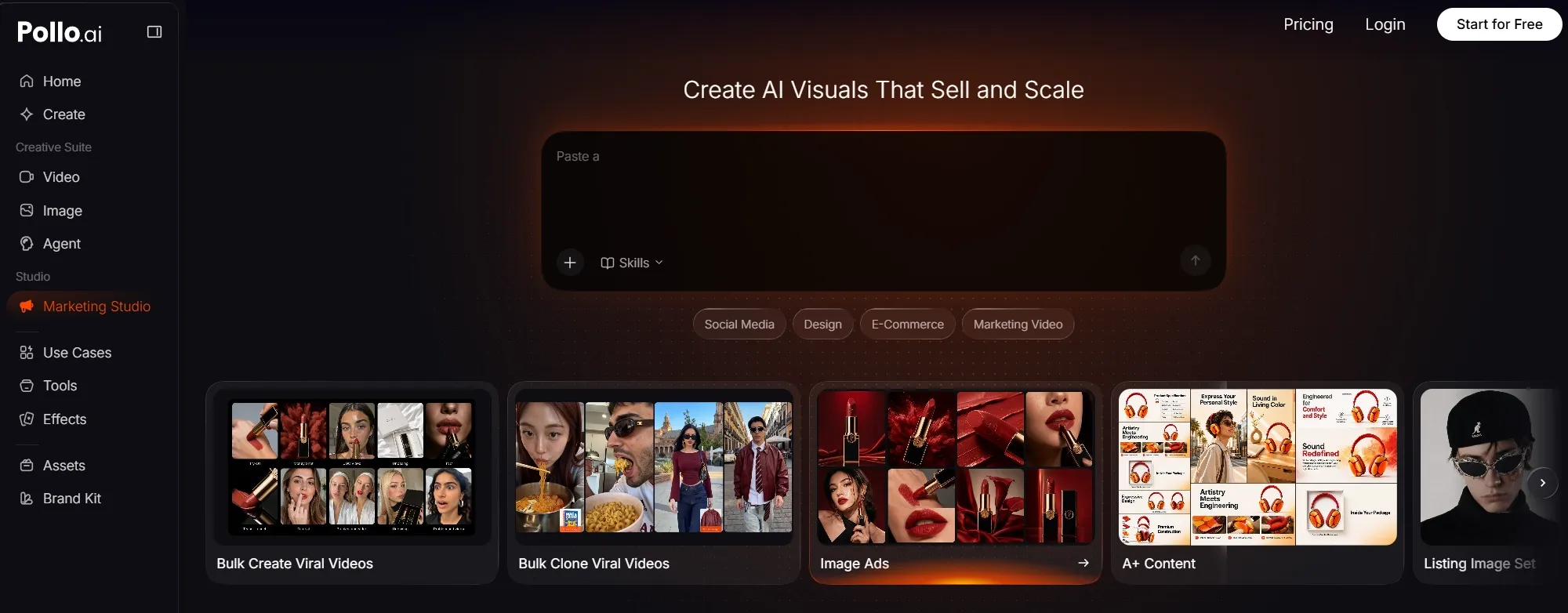
Instead of limiting yourself to either Wan 3.0 or Seedance 2.5, why not head over to Pollo AI and access both AI video generators? As the ultimate AI creative suite, I frequent Pollo AI because it’s integrated with several industry-leading AI models, including Veo 3.1 and Kling 3.0.
So, whether I want to use Seedance 2.5 or Wan 3.0 to produce a branded video, music video, or cinematic sequence, I can experiment to see which model delivers the best possible result. But my favorite part about using this platform is Pollo Agent.
Since it automates the entire video production workflow, I often rely on it when I have a rough concept in mind, and I want it to do all the heavy lifting. Within minutes, I’m able to prototype my ideas and have them publish-ready, no muss, no fuss.
But the most important thing is that I can access all these features and tools via a single paid plan. Instead of dealing with multiple platforms, I can simply turn to Pollo AI to keep me covered on any video creation project that I need help with.
FAQs about Wan 3.0 vs Seedance 2.5
Which is better overall: Wan 3.0 or Seedance 2.5?
Seedance 2.5 is the better option for producing complex, narrative videos and multi-character scenes, especially since it offers targeted editing for more professionally refined outputs. As for Wan 3.0, it’s the more cost-effective option that excels at source-faithful image-to-video renders.
Which model is better for vertical social-media videos?
Both support vertical format, so it depends on what you need the video for. Wan 3.0 can be great for producing simple, inexpensive social content variations like ads, demos, etc. Seedance 2.5 is better if the vertical video needs dialogue or a polished narrative.
Which model is better for dynamic camera movement?
Seedance 2.5 offers camera-perspective editing, which gives you more room to experiment with different angles and movements across scenes. It’s also more responsive to structured prompts that specify camera direction, speed, etc.
Which model is easier for beginners?
Wan 3.0 is perfectly suited for handling simple image-to-video tasks, especially because it’s more conservative and prone to making fewer unexpected changes to the source image. Seedance 2.5 is best for more experienced users who can capitalize on structured prompting.
Which model is better for text-to-video generation?
If you’re using text-only prompts, then Seedance 2.5 would be the stronger choice. It's capable of interpreting prompts more expansively with multiple characters, actions, camera perspectives, etc, making it ideal for imaginative storytelling.
Which model is better for animation and stylized content?
Wan 3.0 is a good choice if you intend to stick to a particular visual style or character design because it excels at preserving identity. That can make it useful for a compact story video built around one recurring subject. But if you want the style to evolve through multiple scenes, characters, and narrative moments, then Seedance 2.5’s flexibility comes in handy.