

Renderforest Review: I Spent 14 Days Testing This AI Video Generator and Here’s the Result
Renderforest is worth trying if you need an AI video platform for templates, explainers, social clips, logo animations, websites, and quick branded content. I liked it most when I had a clear business message and wanted a polished draft fast. But it still feels more template-led than fully AI-native when you need deep creative control or fast campaign variation.
Renderforest Review: TL;DR
Renderforest is worth trying if you need a guided AI video platform for business videos, social clips, explainers, intros, and branded visual content.
It works best when you want templates, simple editing, AI-assisted creation, and a broad set of design tools in one place. But it feels less flexible when you need advanced AI video generation, realistic motion, or many creative variants for marketing tests.
For broader AI video creation and more model choice, Pollo AI is the best Renderforest alternative to consider.
Review Criteria | Verdict |
|---|---|
| Video Templates | Strong fit for explainers, promos, intros, slideshows, and social videos. |
| AI Video Generation | Useful for quick drafts, but less flexible than more AI-native workflows. |
| Branding Tools | Good for logos, mockups, websites, and simple visual identity work. |
| Ease of Use | Beginner-friendly and easier than advanced video editing software. |
| Creative Flexibility | Strong for structured content, less ideal for highly custom campaigns. |
| Best Fit | Small businesses, marketers, educators, freelancers, and content creators. |
What Is Renderforest?
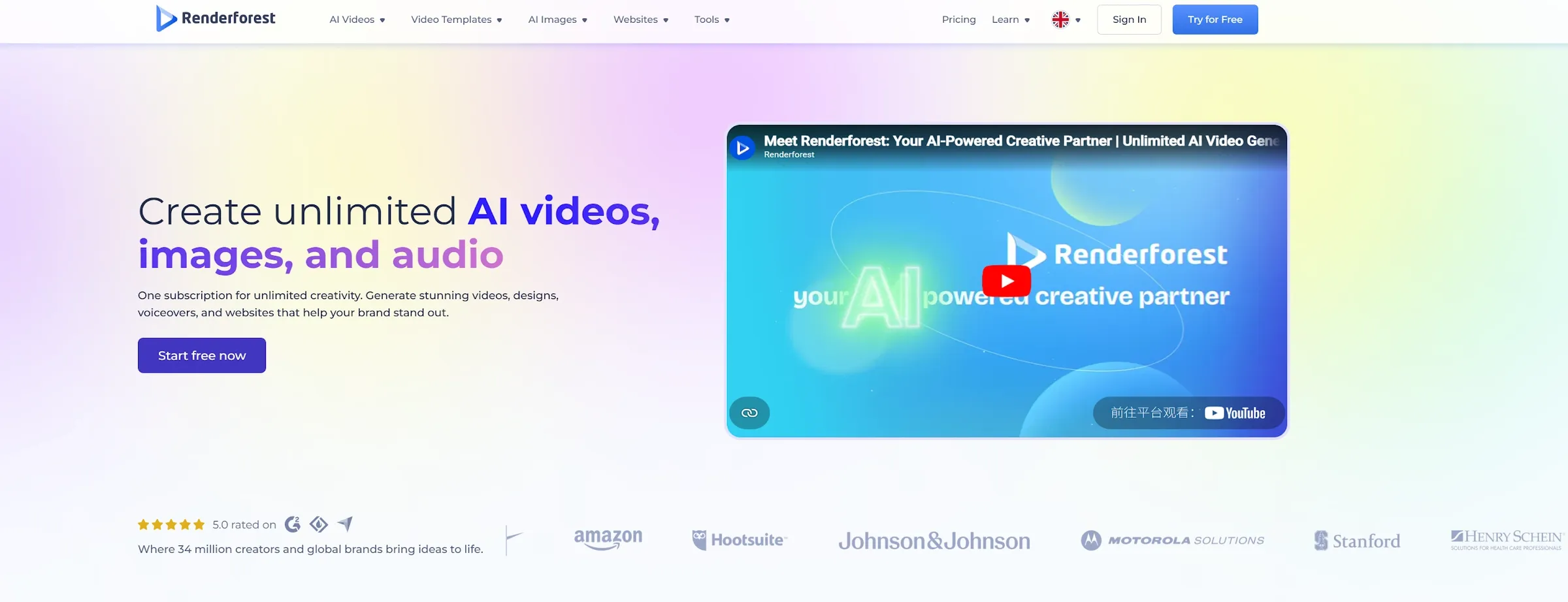
Renderforest is an online AI video and design platform built for users who want to create branded content without using several complex tools.
Instead of focusing only on video generation, Renderforest combines templates, AI video tools, logos, websites, mockups, graphics, and basic editing in one workspace. You can use it to make explainer videos, social clips, intros, promotional videos, training content, and simple brand assets.
That makes Renderforest different from a pure AI video generator. It is not only asking, “What should AI generate?” It is asking something closer to, “How can this brand message become a finished visual asset?”
In my testing, Renderforest felt strongest when I had a clear content goal. It worked better for structured business videos, branded templates, and quick visual production than for open-ended AI filmmaking.
How I Tested Renderforest
I tested Renderforest around common use cases for small teams and creators. I looked at AI video generation, text-to-video, image-to-video, templates, logo-style assets, mockups, and social content workflows.
I did not judge it only by how many tools it offers. I focused on whether the output felt useful after the first draft. That matters because all-in-one platforms can look impressive, but still feel slow if the workflow is not clear.
So I paid attention to three things: how fast I could start, how polished the draft looked, and how much control I had before publishing. Renderforest did well when the task was structured. It felt more limited when I wanted highly original AI visuals or many marketing variations.
What Are Renderforest’s Best Features?
Renderforest’s best features are video templates, AI video creation, brand asset tools, and beginner-friendly editing.
Video Templates for Fast Content Creation
Renderforest’s template library is one of its strongest features. This is useful when you do not want to start from a blank screen. You can choose a format for an explainer, intro, promo, slideshow, logo animation, or social clip, then adjust the text and visuals around your message.
I found this most helpful for business users. A small business owner, teacher, freelancer, or marketer can create something that looks organized without learning advanced editing software.
The limit is originality. Templates are fast, but they can also make the output feel familiar. If your brand needs a very distinct visual style, you may need extra customization.
Renderforest works best when speed and structure matter more than full creative freedom.
AI Video Generation
Renderforest also offers AI video creation for users who want to turn ideas, text, or visuals into videos faster. This is useful for quick drafts, social videos, simple promos, and explainer-style content. It lowers the barrier for users who do not want to build every scene by hand.
In my testing, this worked better when the prompt was clear and the video goal was simple. A short product message, a basic explainer, or a social clip was easier to shape than a complex cinematic scene.
The limitation is control. Renderforest can help generate a video direction, but it may not give the same level of model choice or AI-native control that some creators want. For broader generation, a dedicated AI video generator may be a better fit.
Branding Tools and Visual Assets
Renderforest is also useful because it goes beyond video. You can create logos, mockups, websites, graphics, and other branded visuals. This is helpful for small teams that want one place to build basic brand content.
I liked this part for early-stage projects. If you are starting a brand, launching a small campaign, or building simple visuals for a business, having these tools together can save time.
The tradeoff is depth. A tool that covers many formats may not always go as deep as a specialized design, video, or website platform. That is not a dealbreaker. It just means Renderforest is better for practical brand creation than highly custom creative production.
Beginner-Friendly Editing
Renderforest is easy to approach because the workflow is guided. You do not need to understand a professional timeline, motion design software, or advanced design systems. You can start with a template, edit the scenes, add your message, and export a polished draft.
This makes Renderforest appealing for non-designers. It is useful for small businesses, HR teams, educators, freelancers, and creators who need content without a full production team.
The weak point is flexibility. Guided editing is easier, but it can also feel restrictive if you want to control every visual detail.
So the platform works best for users who value speed, clarity, and simplicity.
What Are Renderforest’s Pros and Cons?
Renderforest is strong for structured branded content, but it is not perfect.
Pros:
- Easy to use for non-designers
- Strong library of video templates
- Useful for explainers, promos, and intros
- Includes logos, mockups, websites, and graphics
- Good for small teams and creators
- Helpful for fast branded drafts
Cons:
- Template-based output can feel familiar
- Less ideal for highly custom AI video projects
- Advanced motion control can feel limited
- Broad toolset may not go deep in every area
- Campaign testing may need more variation tools
- Brand-sensitive work still needs review
Where Does Renderforest Fall Short?
Renderforest falls short when you need deep creative control, highly original video output, or a more AI-native campaign workflow.
Template-Based Videos Can Feel Familiar
Renderforest’s templates are useful, but they can also make videos feel predictable.
This matters most when the content needs to stand out in a crowded feed. A template can help you start faster, but it does not automatically make the final result memorable.
For internal videos, explainers, and small business content, that may be fine. For paid campaigns or brand launches, you may need stronger creative direction.
The template is only the starting point. The message, pacing, and visual choices still matter.
AI Generation Still Needs Direction
Renderforest’s AI tools can help speed up video creation, but they do not remove the need for clear creative input.
If the idea is vague, the result can feel generic. If the source material is weak, the video may need extra editing. If the content is for a real brand, the final output still needs review. That is not a flaw unique to Renderforest. It is true for most AI content tools.
The learning curve is not only technical. It is knowing what you want the video to say and how it should feel.
It Is Not a Full AI-Native Creative Workflow
Renderforest covers many content types, but it does not always feel like the most flexible AI-native platform.
If you need fast ad variations, UGC-style videos, product clips, avatar content, image-to-video experiments, and multiple AI models, you may want a broader workflow.
Renderforest is practical for structured creation. It is less ideal when the content plan requires many creative directions at once.
That is where Pollo AI can feel more flexible.
Move Beyond Template-Led Videos
Create AI videos, product clips, UGC ads, avatars, and campaign variants with a more flexible creative workflow.
Try Pollo AI for Free
Is Renderforest Right for You?
Renderforest is right for you if you need templates, explainers, social clips, intros, logo animations, websites, mockups, and simple branded visuals.
It makes sense for small businesses, freelancers, educators, marketers, HR teams, and creators who want a guided way to produce content quickly.
Skip it if you need advanced AI video control, cinematic generation, deep model choice, or high-volume ad testing.
The simple version is this: Renderforest is strong for structured branded content, but less complete for advanced AI-native production.
How Does Renderforest Perform Across Real Use Cases?
Renderforest performs best when the content goal is clear and the format is structured.
Use Case | My Take |
|---|---|
| Explainer Videos | Strong fit for simple business and educational messages. |
| Social Media Clips | Useful for quick posts, intros, and promotional visuals. |
| Logo Animations | Good fit for branded intros and simple identity videos. |
| Small Business Marketing | Helpful for promos, websites, mockups, and basic brand assets. |
| Training Content | Useful when the message is structured and template-friendly. |
| Product Videos | Works for simple promos, but complex product storytelling may need more control. |
| Campaign Testing | Possible, but not the fastest setup for many creative variants. |
My Personal Take on Renderforest
I like Renderforest because it understands a common user problem. Many people do not want separate tools for videos, logos, mockups, websites, and graphics. They want one place to create polished content without learning everything from scratch. That makes Renderforest practical. It is especially helpful when the goal is a clean business video, a branded intro, a quick promo, or a simple visual asset.
But I hit the limits when I wanted more AI-native control. Renderforest is broad and approachable, but it can feel more template-led than experimental.
My take is simple. Renderforest is a good choice for structured branded content. It is not the only platform I would use for advanced video generation, ad testing, or multi-format creative production.
Why Is Pollo AI a Better Renderforest Alternative?
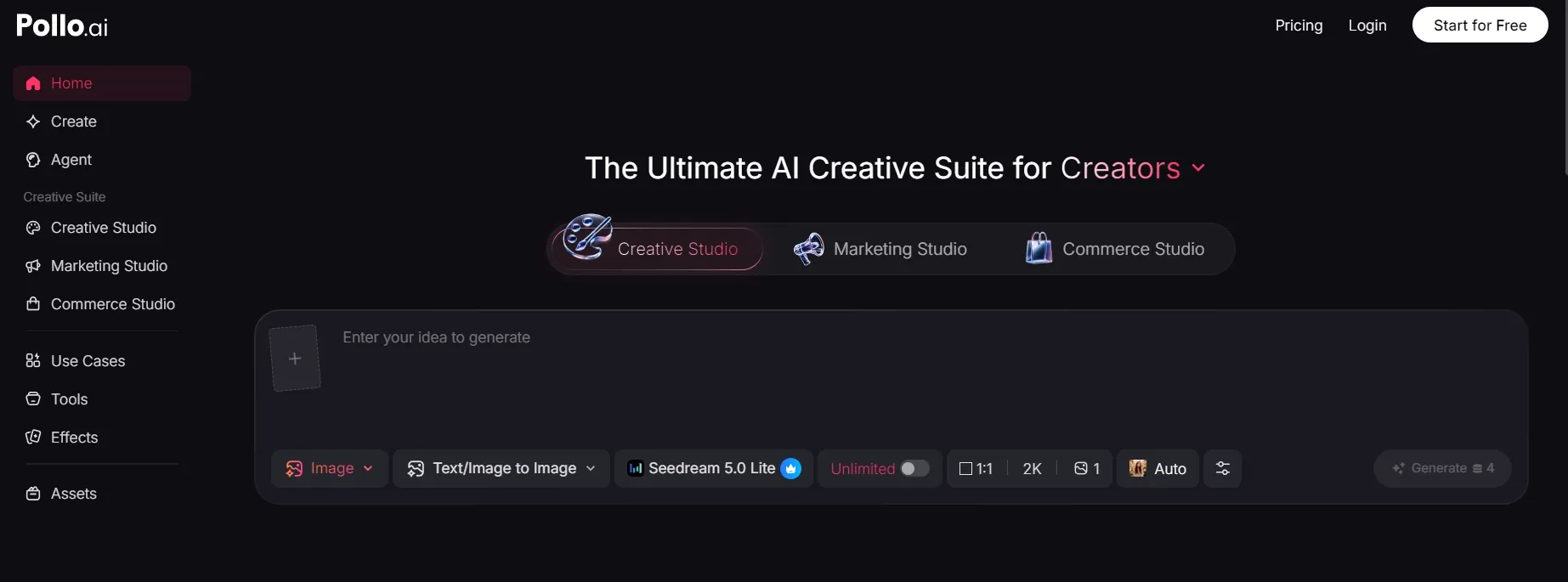
Pollo AI is a better Renderforest alternative if you want to move beyond template-led creation and build a more flexible marketing content workflow.
Renderforest is useful for templates, explainers, logo animations, websites, and simple branded assets. But many marketing teams now need more than polished templates. They need AI video generation, image-to-video clips, product videos, UGC-style ads, avatars, audio, and fast creative variants.
A Broader AI Marketing Workflow
That is where Pollo AI feels more practical. Pollo AI is the ultimate AI creative suite for marketers, creators, and sellers & brands. For this use case, the biggest advantage is Marketing Studio.
Marketing Studio is built for ad and campaign content. It helps users create UGC-style videos, product videos, social ads, and campaign-ready creatives from scripts, images, product links, or ideas.
This matters because modern marketing content rarely stays in one format. A marketer may need a product video, a short social ad, a UGC-style clip, and supporting visuals for the same campaign.
Renderforest is good for structured branded content. Pollo AI is better when the goal is faster marketing production.
More Model Choice for AI Video Creation
Pollo AI also gives users access to many leading AI models, including Seedance 2.5 and Gemini Omni Flash.
That matters because one model rarely fits every video task. Some are better for realistic motion. Some are stronger for cinematic scenes. Others work better for fast image-to-video or social content.
For broader video creation, the AI video generator is useful. For image-led clips, image to video AI gives a more direct path. For campaign work, UGC video ads and the AI product video generator are more focused than a template-first workflow.
From Template Output to Campaign Variants
Renderforest can help you create a polished branded video. But if you want to test more hooks, formats, and creative angles, you may need a workflow built around marketing iteration.
That is where Pollo Agent becomes useful. It helps move from an idea, script, product link, or image toward more complete video content without stitching every piece together manually.
So the difference is simple. Renderforest is good for template-led branded content. Pollo AI is better when you need more model choice and a wider marketing workflow for videos, ads, product content, and campaign variants.
Final Verdict: Is Renderforest Worth It?
Renderforest is worth trying if you need a guided platform for videos, templates, logos, mockups, websites, and simple branded content. It is strongest when the task is structured and the user wants to create polished visuals without advanced editing skills. For small businesses, educators, freelancers, and marketers, it can save real time.
But Renderforest is not perfect. Template-based output can feel familiar, AI generation still needs direction, and the platform may feel less flexible for advanced campaign production.
My verdict is simple. Use Renderforest for structured branded content and quick visual assets. Use Pollo AI when you need a broader creative suite for AI videos, product content, UGC ads, image-to-video workflows, avatars, audio, and multi-format campaigns.